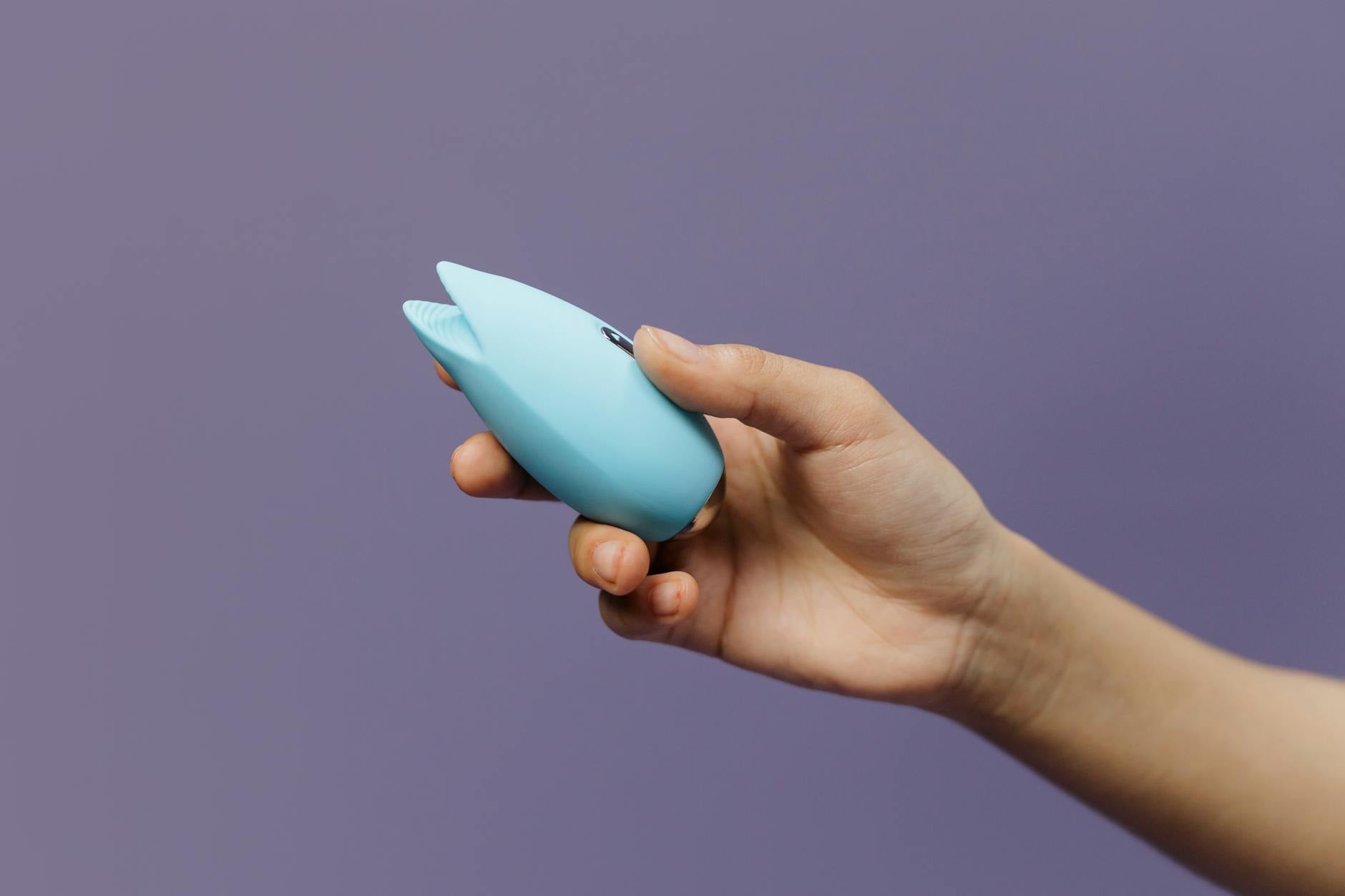
Here's what perimenopause actually does to pleasure
Let's be real. Your hormones are shifting, and you've noticed it. Arousal doesn't land the same way. The quickfire sensation you used to get is slower to build. Or it builds differently altogether. And the part nobody tells you? That's not a sign that pleasure is leaving. It's a sign that the way pleasure arrives is changing.
Perimenopause—that 4-10 year window before full menopause when your estrogen and progesterone start their irregular dance—changes three things about how your body responds sexually. Understanding those three things is the difference between thinking your lemon vibrator doesn't work anymore and realizing you just need to use it differently.
The three hormonal shifts that matter for pleasure
Estrogen levels drop unevenly during perimenopause, which means your vulva tissue gets thinner and less elastic. That's not metaphorical. The blood flow to the clitoris changes too, which means it takes longer to engorge and become sensitive to stimulation. The second shift is in lubrication—your body produces less of it naturally, which changes how friction feels and how quickly sensation builds. The third shift is in your baseline sensitivity. Your nervous system is literally responding to lower hormone levels, so the threshold for feeling stimulation moves.
None of this means you can't have intense, satisfying orgasms. It means the pathway to get there is different.
Why your lemon vibrator timing needs to change
In your 20s or 30s, you might have warmed up in 5-10 minutes. During perimenopause, budget 15-25 minutes of foreplay before you introduce the lemon clitoral vibrator. This isn't about "trying harder." It's about giving your body the actual time it needs for blood to redirect to your genitals, for arousal to layer, and for sensation to register.
The lemon sucker design—using air-pulse suction instead of direct vibration—is genuinely helpful here because it stimulates the entire clitoral complex, not just the external glans. That distributed stimulation often feels less harsh on thinner tissue and can trigger orgasm even when direct vibration feels too intense.
Start on the lower intensity settings. The Lem vibrator's first three patterns are usually enough during perimenopause. You can always increase intensity, but jumping straight to patterns 7-8 often feels overwhelming or even uncomfortable on tissue that's lost some of its elasticity.
Lubrication is not optional anymore
I know you might not need external lubricant in your 20s or 30s. Perimenopause changes that. Water-based lubricant should become a standard part of your pleasure routine, the same way you'd use sunscreen at the beach.
Why? Because you're not broken. Because thinner tissue benefits from glide. Because your body is producing less of its own lubrication, and adding external lube actually makes sensation easier to feel, not harder. It reduces friction that would otherwise feel raw or uncomfortable, which means your nervous system can focus on pleasure instead of protection.
Apply it directly to the Lem vibrator and to the external vulva before starting. You'll likely need to reapply partway through, especially if you're going for 30 minutes or longer. This is normal.
The warm-up routine that actually works
Here's a concrete sequence I recommend to most people navigating perimenopause:
Minutes 1-5: Manual touch, no toys. Hands on your vulva, on your inner thighs, on your breasts. Let your brain catch up to your body. During perimenopause, arousal is less automatic—it requires more conscious attention. That's not weakness. That's just how the physiology works.
Minutes 5-10: Build rhythm with your hands or a partner's touch. Bring breathing into it. Deeper breaths actually increase blood flow to your genitals. Notice where sensation is strongest.
Minutes 10-15: This is when you introduce the lemon clitoral vibrator, but start on pattern 1 or 2. Let your body adjust to the sensation. You're not looking for instant intensity. You're looking for the moment when sensation starts to feel unmistakably pleasurable.
Minutes 15-25: Once you're warmed up, you can move through the patterns, or stay with one that works. Many people find they prefer staying with a lower pattern for longer during perimenopause rather than chasing higher intensities.
This timeline might feel long compared to how you used to work. It's not. It's how your body actually functions right now, and honoring that beats fighting it.
Why sensation might feel different (and why that's okay)
You might notice your orgasms feel slightly different during perimenopause. Sometimes more concentrated in the clitoris, sometimes diffuse across the whole vulva. Sometimes they build differently—less like a sharp peak and more like a rolling wave. Some people report that orgasms actually feel more intense once they adjust to the new timeline.
The reason is neurological. Your clitoris has 8,000+ nerve endings, and perimenopause doesn't change that. What changes is the blood flow and tissue thickness around those nerves. Different tissue composition means the stimulation reaches your nervous system differently. Your brain is interpreting the same signal in a slightly different way.
This is not worse. It's different. And often, once you stop fighting the different and start exploring it, you find things about it you actually prefer.
When to use your lemon vibrator (timing matters more now)
During perimenopause, the time of month your pleasure session happens can matter. If you track your cycle, you might notice that sensation is easier in the first half of your cycle, when estrogen is higher. This doesn't mean you can only use your lemon sexual toy at certain times, but it means being strategic about when you expect the most responsive experience.
If you're in a low-estrogen week and sensation feels sluggish, that's information. It's not a sign to give up. It's a sign to extend your warm-up time another 5-10 minutes or to use extra lube.
You might also notice that pleasure sessions are easier to access when you're less stressed, more hydrated, and well-rested. Perimenopause makes everything slightly more fragile—sleep, stress, hydration all affect arousal more than they did before. This is why working with a partner or being gentle with yourself during solo sessions matters more than ever.
The conversation to have with a partner (if you have one)
If you're in a relationship, the shift in how your body responds can feel like rejection to a partner who doesn't understand perimenopause. It's not. It's biology.
Here's what to actually say: "My body's going through hormonal changes that mean arousal takes longer and feels different. I want to explore this with you, and I need you to slow down with me." That's the whole conversation.
Then show them. Let them participate in the longer warm-up. Use your lemon clitoral vibrator together or in front of them. Remove the mystery. When your partner sees you take 20 minutes to build to pleasure and then have a genuine, full-body orgasm, they usually understand quickly that this isn't a problem to fix. It's a rhythm to adjust to.
Common worries, actually answered
Will the lemon vibrator still work if sensation is lower? Yes. Absolutely. The Lem's suction mechanism is designed to stimulate broadly across the clitoral complex, which can work better during hormonal shifts than direct vibration alone.
Is longer warm-up time a permanent thing? Probably yes, through perimenopause and into postmenopause. Some people find it shortens slightly after the transition completes, some don't. The point is to stop expecting it to feel like it used to and start meeting your body where it actually is.
Do I need to see a doctor? If you're having pain during sex, yes. If sensation is completely gone and lubrication hasn't helped, worth checking in. If you're bleeding heavily, mood shifts are severe, or sleep is gone—these are perimenopause questions for your GP. But normal shifts in arousal timeline and sensation? That's the expected physiology.
Should I try a different lemon adult toy? Not necessarily. Most people find that switching tools isn't the answer—switching expectations and technique is. That said, how to choose a lemon vibrator based on your clitoral sensitivity level is a whole conversation if you want to explore it.
FAQ: Perimenopause, hormones, and your lemon vibrator
Does the lemon vibrator work if you have lower estrogen?
Yes. The Lem vibrator's air-pulse suction actually works well for lower-estrogen bodies because it doesn't rely on the kind of deep tissue engorgement that direct vibration requires. The suction can stimulate sensation even when blood flow is lighter. You'll likely need more warm-up time, but the vibrator itself is functional and often feels better than traditional vibrators during this phase.
How much longer does warm-up take during perimenopause?
Most people add 10-15 minutes to their pre-vibrator warm-up time during perimenopause. So if you used to spend 5 minutes warming up manually, budget 15-25 minutes now. This isn't an infinite slope—it plateaus once you're in perimenopause. It's not "every year it gets longer." It's a shift that happens and then stays relatively consistent.
Can you use a lemon clitoral vibrator if you have vaginal dryness?
Absolutely, and water-based lubricant is your tool here. Vaginal dryness doesn't mean you can't use toys—it means you need to add back what your body used to produce naturally. Use generous amounts of lube, reapply as needed, and this becomes a non-issue. Some people find that regular use with proper lubrication actually helps blood flow over time.
Does sensation come back after perimenopause?
Not exactly. Full menopause usually brings a new equilibrium—sensation stabilizes at whatever your postmenopausal normal is. Some people find their sensation actually improves once hormones stabilize because they're not dealing with the fluctuations anymore. Others find it stays where it is during perimenopause. The key is that you stop chasing the way it used to be and start building pleasure practices that work for where you are now.
Is it normal to need your lemon vibrator more during perimenopause?
Yes. Many people reach for their lemon sexual toy more frequently during perimenopause because it's the most reliable way to access orgasm when everything else feels unpredictable. This isn't desperation—it's strategy. Your body knows what works. If your lemon sucker is that tool, use it.
Should you tell your partner you need a different pleasure routine?
Yes. The longer warm-up, the lube, the need for more foreplay—these aren't secrets. They're information your partner needs if you're going to have satisfying sex together. A partner who gets defensive about "taking too long" is someone you might need to have a deeper conversation with, because perimenopause is a real body change, not a personal slight.
What actually comes next
Perimenopause is not menopause. It's a transition. And transitions are when people often make the mistake of thinking the end is near when actually they're in the middle of change.
Your pleasure doesn't end. It shifts. The lemon vibrator doesn't stop working—you just use it differently. The warm-up takes longer, but it also becomes a practice instead of a checkbox, which honestly? Many people find they prefer.
If you're navigating perimenopause and feeling lost about how pleasure changes, you don't have to figure it out alone. The team at My Lemon Sucker is here to answer questions about what works, how to use your lemon clitoral vibrator at different life stages, and what's normal. Get in touch if you want to talk through what's happening in your body. We're used to these conversations, and they matter.