
Let's name the thing nobody talks about
One of you cracks at eight minutes. The other needs twenty-five. You're not broken. Neither of you is selfish. This is just how bodies work, and trying to force them to sync through sheer willpower or creative positioning has the success rate of hoping to fall asleep faster by thinking harder about falling asleep.
Here's the actual problem: mismatched pleasure timelines make partners feel like someone always has to sacrifice. The faster person waits and worries they're bored. The slower person feels rushed and self-conscious. Both of you leave the experience feeling suboptimal. A lemon clitoral vibrator from My Lemon Sucker solves this not by rushing the slower partner, but by giving them independence during the moments when you need it most.
Why the speed gap happens (and why it's not personal)
Clitoral sensitivity, arousal buildup, and orgasm capacity are neurological. They're not about attraction or connection. A person's pleasure timeline can shift with stress, medication, hormones, age, or just the day of the week. The same person who climaxes in ten minutes one week might need thirty the next. That's not inconsistency. That's biology.
The real gap widens when couples try to stay "together." Penetration, for instance, often favors one partner's timeline over the other's. Synchronized thrusting that works for one person becomes either too fast or too slow for the other. Add performance pressure, and arousal stalls completely.
A lemon vibrator changes the equation because it's controlled by the person using it. No compromise required. No waiting. No guessing at pressure or speed. Just direct clitoral stimulation that works at exactly the pace that person needs.
The mindset shift that has to happen first
Using a vibrator together isn't a sign your bodies don't work well together. It's the opposite. It means you're prioritizing both of your pleasure over a fantasy that works for roughly five percent of couples anyway.
If you're the faster partner, the work is letting go of guilt. You're not abandoning your partner by finishing first. You're not failing. You're just done. That's allowed.
If you're the slower partner, the work is fighting the shame. You don't need to apologize for taking longer. You're not broken. You're not keeping your partner hostage. You're just working at your own pace.
Both of you benefit when you stop treating penetration as the only "real" sex and start thinking of pleasure as something that can happen in parallel, in series, or in a dozen hybrid shapes that don't fit the usual script.
Three real strategies for couples with different speeds
These work with a lemon clitoral vibrator as the variable, not as some emergency rescue tool.
Strategy One: Sequential pleasure. The faster partner finishes first, then fully transitions into supporting the slower partner. You're done performing. You're now an active participant in their experience. Hold them, kiss their neck, use your hands, talk, adjust the vibrator rhythm if they want it. You're not waiting anymore. You're building. This completely changes the energy from "sorry I came fast" to "now let me help you get there."
Strategy Two: Parallel stimulation. Both of you use vibrators at the same time, at your own speeds. A lemon clitoral vibrator works perfectly for this because it's quiet, controlled, and doesn't require coordination. You can be completely focused on your own body while still being physically close, making eye contact, touching elsewhere. This is particularly good for people who find penetration itself distracting and prefer clitoral focus anyway.
Strategy Three: Modified penetration. One partner is inside, one partner uses the lemon vibrator on the outside. This separates the penetration rhythm from the clitoral stimulation rhythm, which means the slower partner gets the speed they need while the faster partner gets the sensation they want. The person with the vibrator is in control of their own orgasm timing, which removes the entire "am I taking too long" anxiety loop.
How to actually introduce this without it feeling like rejection
The conversation matters more than the vibrator. Don't lead with "we need this because something's wrong." Lead with what you want. "I want you to feel as good as possible" is not the same as "you're not satisfying me right now." The first is about expansion. The second sounds like criticism.
Start with curiosity, not solution-hunting. "What would feel better for you?" or "Do you think trying something would help us both enjoy this more?" Let them land on the vibrator idea. If you bring it up as your own desire ("I'd really like to try this"), it's different from proposing it as a fix for their inadequacy.
The lemon clitoral vibrator itself is straightforward to introduce. It's small, aesthetic, quieter than most vibrators, and its suction-based design is gentle enough that it doesn't require the ramp-up conversation that some more aggressive toys do. Literally just leave it out on the nightstand, say "I picked this up, want to try it together next time?," and let curiosity do the work.
What happens during the experience
Start with your current foreplay. Let arousal build as it normally does. When the faster partner is getting close, they can say so, or you can feel the shift. Then introduce the vibrator. The slower partner uses it at whatever speed and pattern feels right.
The faster partner still has choices. They can keep penetrating (if that's what you do), they can shift to hand stimulation elsewhere, they can slow down completely and focus on the feeling rather than rhythm. They can talk, watch, touch. They're not just waiting.
The slower partner now has direct control over the exact sensation they need, which usually speeds things up simply because there's no mental interference. No worrying about taking too long. No performing. Just sensation.
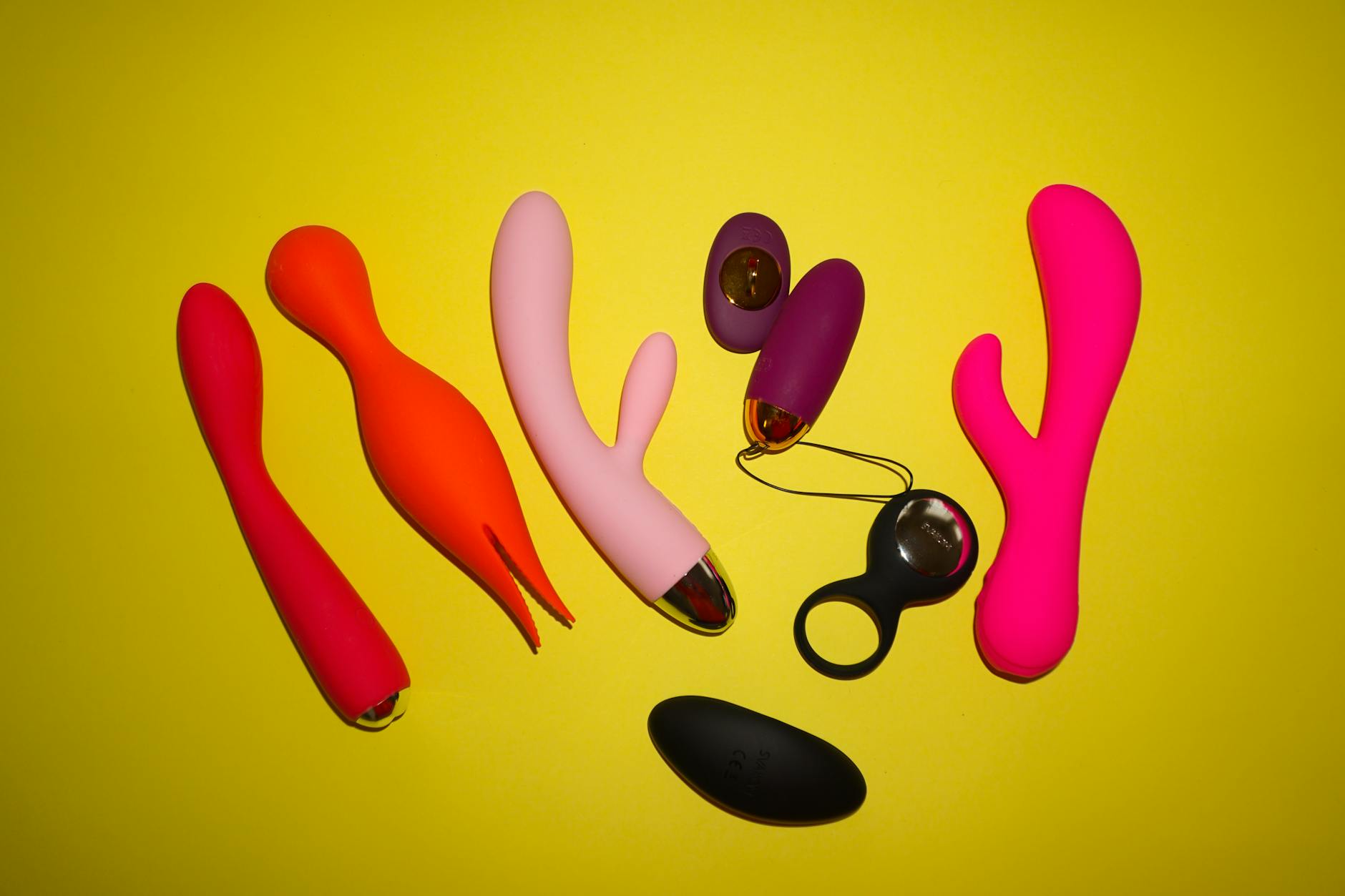
Photo by DRT.fm on Pexels
Why the lemon design matters here
A lemon clitoral vibrator from My Lemon Sucker works especially well for this specific use case because of how it stimulates. The gentle suction mechanism reaches the entire clitoral complex, not just the external tip. For someone who's slower to arousal, that means richer sensation with less surface pressure. You're not looking for speed. You're looking for the right kind of stimulation.
The size also matters. It's small enough not to interfere with penetration if that's what you're doing, quiet enough that you can focus on each other instead of the buzzing, and intuitive enough that there's no learning curve. You turn it on, find the pattern that works, and go from there.
Common worries (addressed)
"Won't using a vibrator make sex feel transactional?" No. Sex already works best when both people are getting what they need. A vibrator just makes that easier. You're still touching, still present, still connected. You're just not pretending your bodies work identically.
"What if my partner thinks I don't find them attractive?" This is why the conversation comes first. "I want you to have an orgasm" is literally the opposite of rejection. It's prioritization. If your partner can't see it that way, you might have a relationship conversation that goes deeper than the vibrator.
"Doesn't this take away from the "intimacy" of finishing together?" Finishing together is a myth that works for about five percent of couples. Most of us finish at different times. You can be incredibly intimate while having completely different orgasm timelines. Intimacy is presence and attention, not synchronized physiology.
The longer game
Once you've used a lemon vibrator together a few times, several things usually happen. The slower partner often speeds up slightly because the pressure's off. The faster partner stops feeling guilty. Both of you realize that "together" doesn't have to mean "at the exact same moment." You might find you prefer this way. You might bring it into certain sessions and skip it others. You might discover entirely new things about what works for each of you.
Using a lemon sexual toy as a couple isn't admitting defeat. It's the opposite. It's saying your pleasure matters enough to solve for, and you trust your partner enough to try something new.
FAQ
How do I know if my partner will be open to using a vibrator during sex?
The best way is to ask directly and privately, outside of the bedroom. Frame it as curiosity, not criticism. "I've been thinking about how we could both feel better, and I found something I'd like to try. Would you be open to that?" Most partners appreciate honesty over hints. If they say no, that's information worth having. If they seem hesitant, ask what the hesitation is. Often it's a misunderstanding, not a hard boundary.
Can a lemon vibrator actually help if our pleasure speeds are really far apart?
Yes, but the vibrator is the easy part. The real work is letting go of the belief that your bodies should work the same way. Once you've made that shift mentally, a lemon clitoral vibrator is just a tool that makes the practical side easier. Some couples find their speeds actually start to converge once the pressure's off, because arousal isn't being sabotaged by self-consciousness anymore.
What if we try it and it doesn't feel good for the slower partner?
Then you've learned that direct vibration isn't what they need. Some people prefer indirect clitoral stimulation, or they need a different pattern, or they need more manual touch alongside the vibrator. The point isn't to find the perfect toy. It's to find what works for both of you. Sometimes that's a vibrator. Sometimes it's repositioning. Sometimes it's just giving yourself permission to take longer.
Is it weird if the faster partner wants to use a vibrator too?
Not at all. Some people enjoy using vibrators parallel to their partner. It creates a different kind of intimacy because you're both focused on your own sensation while being physically close. Lots of couples find they both enjoy it, and the whole "mismatched speeds" becomes a non-issue because you're working at your own pace anyway.
How do I not feel like I'm "failing" if I need a vibrator to orgasm during partnered sex?
Reframe the question. You're not failing to orgasm with your partner. You're ensuring your orgasm actually happens, which is the entire goal. Sex is not a test you pass or fail. It's something you do together to feel good. If a vibrator makes that possible, you've succeeded. Full stop.
Should we talk about how often to use it, or just see what feels natural?
Start with "whenever feels right," but check in afterward. A quick conversation like "Did that feel better for you?" or "Want to do that again?" tells you both what's working. Over time, patterns emerge. Some couples use a vibrator every time. Some use it occasionally. Some find they don't need it anymore once the speed anxiety is gone. All of those are fine.
The real win
Couples with different pleasure timelines often stop having sex altogether because the gap feels impossible to navigate. They think they have to choose between frustration and rejection. A lemon vibrator isn't magic. It's just a really practical way to say: you both deserve to feel good, your timelines don't have to match, and we can build something better than compromise. We can build pleasure that actually works for everyone.
If you're curious about how to get started, my guide to using a lemon vibrator when pleasure takes longer to build covers the slower partner's perspective in detail. And if you want to understand your own arousal pattern better, this piece on clitoral sensitivity shifts walks through what's actually happening in your body.
Your speeds aren't a problem. They're just information. And once you have the right tools and mindset, they stop being friction and start being just another part of how you work together.