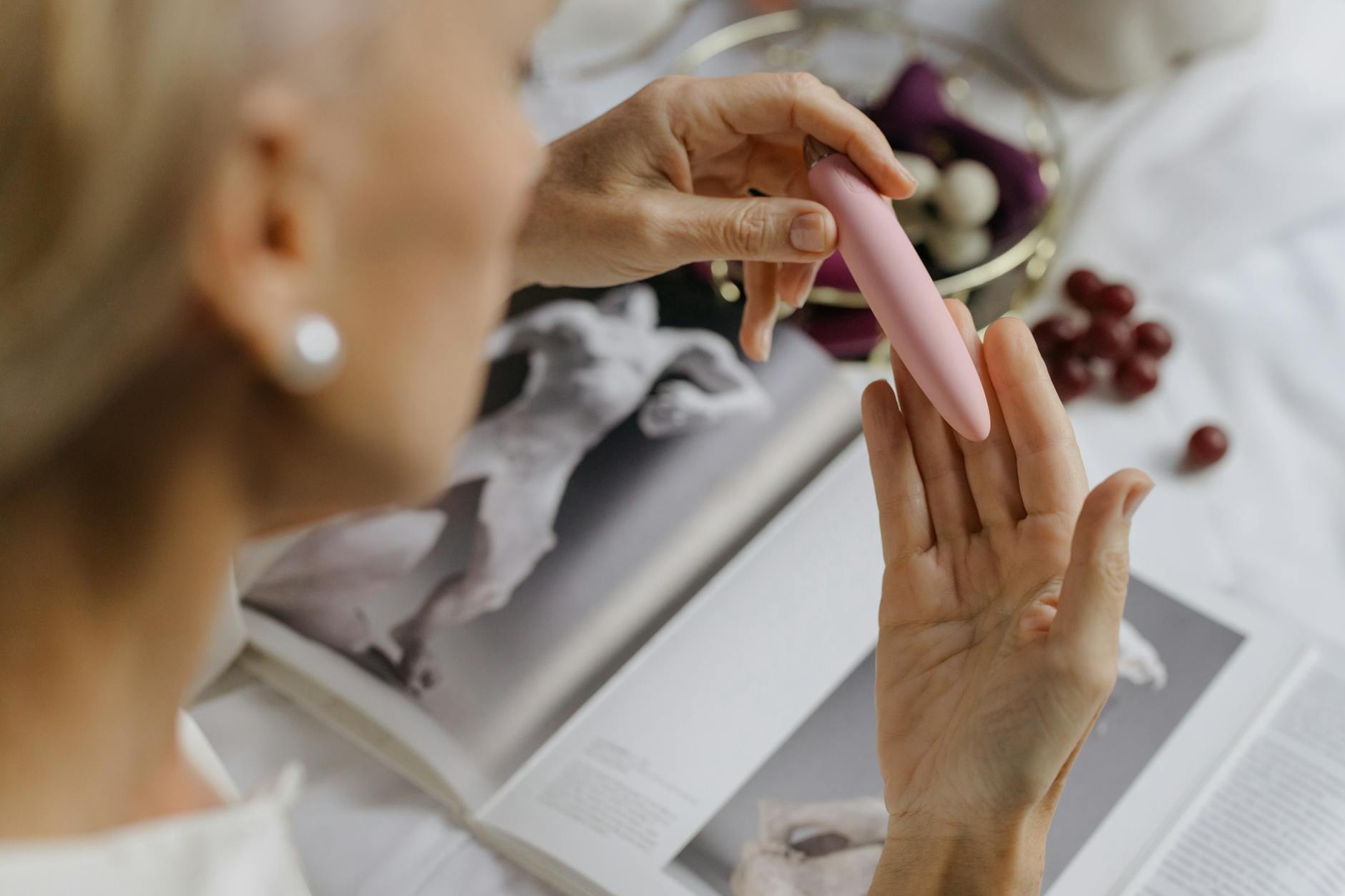
Here's what nobody tells you about getting older
Arousal doesn't disappear as you age. It just takes longer to arrive. And honestly? That's not a problem waiting to be fixed. It's information. Your body is telling you something, and the faster you listen, the better sex actually gets.
The myth is that this slowdown means something's wrong with you, your partner, or your relationship. The truth is that it's a totally normal shift in how your nervous system responds to stimulation. Hormones change. Blood flow patterns shift. Neural pathways rewire slightly. None of that means you've lost the ability to feel pleasure.
It means you need to stop trying to arrive at arousal the old way and start meeting your body where it actually is right now.
Why arousal takes longer (the science part, quickly)
Think of arousal like warming up an engine. When you're younger, the ignition catches fast. As you age, it still catches. It just takes a few extra minutes of gentle acceleration.
Several things happen simultaneously. Reduced estrogen (in people with ovaries) and testosterone (in everyone) means less blood rushes to your genitals as quickly. Your nervous system becomes slightly more selective about what registers as erotic. Mental bandwidth shifts. You're not distracted by the same things that used to flip a switch in your twenties.
This isn't decline. This is specificity. You've literally become pickier about pleasure, and that's a feature, not a bug.
Why a lemon clitoral vibrator actually helps here
Here's where a lemon vibrator changes the game. Air-suction devices like the Lem are engineered to bypass the slow warm-up process by stimulating nerve endings in a way that doesn't depend on how quickly blood flow arrives.
Instead of waiting for physical engorgement to signal "okay, now pleasure can happen," the lemon vibrator talks directly to your clitoral nerves. Suction creates a rapid, concentrated pulse that your nervous system recognizes immediately. You're not fighting against a slower arousal curve. You're using a tool that meets your actual physiology.
When arousal builds slowly, direct clitoral stimulation from a lemon sucker often works better than waiting for full-body sensation to develop first. The Lem, in particular, creates sensation that's distinct enough to jumpstart arousal rather than waiting for it to develop naturally.
This matters because it reframes the whole experience. Instead of "my body is slow," it becomes "this approach works for how I'm wired now."
The warm-up ritual that actually works
If arousal is taking 20 or 30 minutes to build, stop treating that as a flaw to fix. Treat it as part of the experience, not a barrier to get past.
Allocate time deliberately. Not "whenever," but actually 30 to 45 minutes without an agenda beyond yourself or your partner. This changes everything psychologically. You're not rushing. You're not comparing to how it used to be. You're settling in.
Start with something that feels good but not explicitly sexual. For some people, that's a warm shower. For others, it's sitting together in dim light, music playing, conversation. The goal is to move your nervous system from "on alert" to "available." That takes actual time, and that's fine.
Then introduce touch, slowly. Hands on your own body, or your partner's hands on yours. Nothing urgent. Just sensation. After 10 or 15 minutes of this, introduce the Lem or another lemon vibrator. By then, your nervous system is primed, and the suction stimulation lands differently. It feels like an escalation, not a jolt.
Many people find that this ritualized approach actually creates more pleasure than the old "just happen to be in the mood" dynamic ever did.
Patterns and intensity settings that work
Lemon vibrators usually come with multiple settings. When arousal builds slowly, resist the urge to jump to high intensity immediately.
Start at pattern one or two. Let your clitoris adjust to the sensation for a minute or two. This isn't about endurance. It's about allowing your nervous system to recognize the stimulation and respond to it. Skipping this step is like turning the volume all the way up before the song even starts. You lose the full range.
After 2 to 3 minutes, you'll likely feel a shift. Not necessarily toward orgasm, but toward deepening arousal. That's when you can experiment with slightly higher patterns. The key: go slowly enough that you're tracking what feels good, not just chasing intensity.
Many of my clients who experience slower arousal report that using patterns rather than just "high" and "off" actually creates longer, more satisfying sessions. Because you're moving with your arousal instead of trying to drag it along.
The mental part (which is half the battle)
Honestly, the biggest obstacle isn't your body. It's the narrative in your head that says this slowness is a failure.
If you're comparing yourself to how you were at 25, you're going to feel broken. If you're comparing yourself to porn, you're going to feel broken. If you're waiting for the exact arousal pattern you used to have, you're going to feel broken.
None of that is useful. Instead, try this. Your arousal curve is what it is now. A lemon clitoral vibrator isn't fixing a broken body. It's a tool that works with how your body actually functions right now. There's a real difference.
Talk about this with a partner if you have one. Not as a problem to solve, but as useful information. "My arousal takes longer now" is not the same as "I'm not interested." The first is a timeline adjustment. The second is desire. Don't confuse them.
If you're solo, this is even simpler. You're giving yourself permission to take time. To explore what feels good now, not what felt good before. That's not compromise. That's maturity.
When timing is actually about something else
Sometimes slower arousal isn't about age. It's about stress, medication, relationship friction, or something else entirely wearing a biological disguise.
If arousal has become slower recently, and you're also dealing with a lot of stress or a relationship shift, that's worth naming separately. Your body isn't aging differently. Your nervous system is busy. That's different, and the fix is different too.
If you've started a new medication, talk to your doctor. Some medications genuinely do affect arousal. That's fixable, either by adjusting the medication or by adjusting your expectations for this season.
Use a lemon vibrator as one part of the toolkit, not the whole toolkit. If everything else feels off, that's worth examining separately. But if arousal is just slower while everything else feels fine, you've already got the answer. You just need the right tool and the right mindset.
FAQ: Common questions about slow arousal and lemon vibrators
Does using a vibrator make arousal even slower over time?
No. This is a persistent myth. Your clitoris doesn't become "desensitized" to vibration the way some people worry. What actually happens is you figure out what kind of stimulation works best for you. If that's a lemon vibrator, great. Your nervous system isn't declining. It's learning.
Can my partner help if I'm using a lemon clitoral vibrator?
Absolutely. Some couples find that having a partner use the Lem on them creates a different kind of intimacy than using it solo. Others prefer to use it on themselves while being together. The key is communication. Tell them what tempo feels good, what patterns you're enjoying, and whether you want them quiet or engaged in conversation.
How long does it usually take before a lemon vibrator helps with slow arousal?
Most people notice a difference on the first or second use. But the real shift happens over a few weeks when you stop fighting the slower timeline and start working with it instead. The tool accelerates sensation, but your mindset accelerates the whole experience.
Is it normal for orgasms to also take longer?
Yes, completely normal. Your arousal curve and your orgasm curve often slow down together. Some people find that longer arousal actually creates more intense orgasms. Others notice their orgasms feel different but still completely satisfying. There's no timeline you should be hitting.
Does age always mean slower arousal?
No. Some people experience shifts at 35. Others at 50. Some never really do. Hormones, stress, relationship satisfaction, health, and individual wiring all matter. Slow arousal isn't inevitable. But if it happens, it's nothing to fight.
Should I try a lemon vibrator solo first or with a partner?
Do whatever feels less self-conscious. Some people are way more comfortable exploring alone, getting to know the tool, and then bringing it into partnered sex later. Others prefer to try it together from the start. Either way works. The tool isn't the issue. Your comfort with using it is what matters.
The takeaway
Your body at 40 or 50 or 60 isn't broken. It's just operating on a different timeline. A lemon vibrator, especially a clitoral sucker like the Lem, works with that timeline instead of fighting it. You get to spend more time building arousal, which often means better sessions overall.
If you're watching your arousal change and wondering what that means, it probably just means you're human and aging like humans do. The good news? You've got decades of sexual experience and self-knowledge behind you. You know what feels good. You just need tools that work with how you're wired now.
Have questions about finding the right lemon vibrator for your body, or navigating arousal shifts with a partner? That's exactly what we're here to help with. Reach out if you want to talk through what might work best for you.