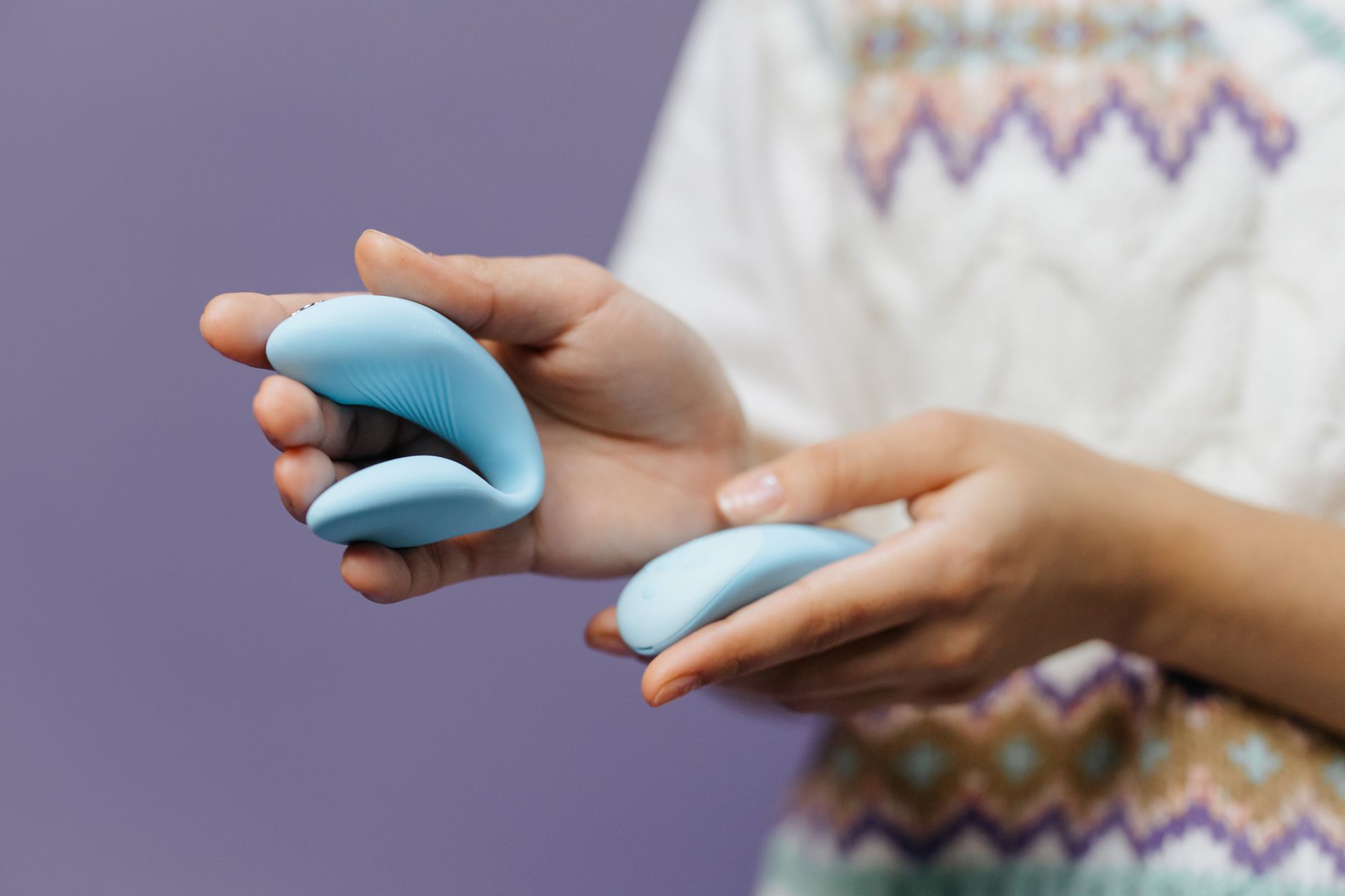
Here's the thing about resistance
When your partner says no to vibrators, they're usually not saying no to pleasure. They're saying no to something else entirely. Maybe they think it means their touch isn't enough. Maybe they're worried about being replaced. Maybe they grew up with messages that toys are dirty or shameful. Maybe they just don't understand what they're for.
The conversation about bringing a lemon vibrator into your shared sex life isn't actually about the toy. It's about what the toy represents to them.
Why partners resist (and it's not what you think)
I've worked with dozens of couples where one person wanted to introduce a clitoral vibrator like a lemon toy and the other person dug in their heels. Almost never was the resistance about the object itself.
Here's what I actually hear:
The insecurity angle. "If you need a vibrator, I'm not doing something right." This one shows up constantly and it's usually rooted in old beliefs about masculinity or adequacy. A partner assumes that wanting external stimulation means they're failing somehow.
The shame angle. Some people grew up hearing that toys are for lonely people or perverts. They might want pleasure but feel morally conflicted about the means. This is especially common in people from religious backgrounds or cultures where female pleasure was never discussed openly.
The dominance angle. Some partners feel like toys represent a loss of control or intimacy. If you're getting off with something other than them, where do they fit? This is often a sign that the relationship itself needs deeper work around connection, not just a conversation about equipment.
The mismatch angle. Sometimes your partner just doesn't prioritize sexual novelty the way you do. You want to explore. They want things to stay the same. That's a values mismatch, not a defect on either side.
The conversation you actually need to have
Don't lead with the toy. Lead with what you want.
Literally frame it like this: "I want to talk about something that would help me feel better in bed, and I need you to hear me out without getting defensive." You've already named the stakes. You're not attacking them. You're asking for their openness.
Then say: "Sometimes I want more intense clitoral stimulation than friction alone gives me. It's not about you. It's about my body and what it needs. A lemon vibrator would help with that."
Notice what you just did. You separated three things:
- Your desire for pleasure (valid and normal)
- Your body's actual response (not their responsibility to fix)
- The tool that helps (not a replacement for them)
Now here's the part where most people derail. They jump to "Don't you want me to feel good?" or "Why are you being so closed-minded?" Both of those are defensive. Both of those make your partner feel attacked.
Instead, ask them what they're worried about. Actually listen. Don't argue or defend yet. Just listen.
Common worries:
- "Will you want me less?"
- "Does this mean I'm not enough?"
- "Will it ruin the intimacy between us?"
- "Is this where the relationship goes from normal to weird?"
- "What does this say about you wanting this?"
Address each one directly:
On wanting them less: "No. A vibrator is a tool, like lube or a pillow under your hips. It doesn't replace you. It works alongside you. Sometimes we use it together. Sometimes solo. Either way, you matter to me and to my pleasure."
On being enough: "You being enough and me wanting more stimulation are not opposites. My clitoris needs certain kinds of input to reach orgasm. That's anatomy, not a referendum on you."
On intimacy: "When I feel satisfied sexually, I'm more present with you. Better orgasms mean more connection, not less."
On weirdness: "Lots of couples use toys. It's normal. And even if it were unusual, our pleasure matters more than fitting a script."
The introduction that works
Let's say your partner agrees to try it. Now what?
Don't surprise them with it in the moment. That's a violation of consent and it will make them feel blindsided. Instead, tell them when you're planning to use it.
"Next time we have sex, I want to try the lemon vibrator I mentioned. Is that okay? Any concerns before we get started?"
Then, when you're actually in bed, show them the toy. Let them hold it. Let them see how it works. Demystify it. Tell them what feels good about it.
If your partner is willing, ask them to use it on you while you're together. This does several things at once. It keeps them involved. It gives them power. It lets them see your actual response in real time. And honestly, watching your partner have a strong orgasm is pretty hot to most people, regardless of what tool is involved.
Start slow. Use a lower setting. Let them control the pace and pressure initially. You can take over later, but in this first experience, them being the operator can actually ease their anxiety.
Don't perform gratitude or fake enthusiasm afterward. Just be real. "That felt amazing" or "I want to do that again" is enough.
When the answer is still no
Sometimes, even after all this, your partner won't budge. They don't want toys in the relationship. Period.
You get to decide if that's a dealbreaker for you. Seriously. That's a legitimate decision point.
But if you're staying, you have options:
Option 1: Solo use. You can use a lemon vibrator alone without the relationship collapsing. Lots of partnered people do this. It's not infidelity. It's self-care.
Option 2: Compromise on timing. "I'll only use it when we're apart" or "I'll use it before we have sex to warm up, then we'll have sex without it." Some middle ground might exist.
Option 3: Deeper work. If this is part of a larger pattern where your partner shuts down your desires or controls your sexuality, that's a red flag. Consider talking to a couples therapist.
What not to do
Don't shame them for their hesitation. Don't call them prudish or closed-minded. Don't punish them by withdrawing affection. Don't sneak toys in without permission. Don't compare them to an ex who was more open. Don't make this about proving a point.
You want to build trust, not win an argument.
The long game
Sometimes a partner comes around over time. They see you using a lemon clitoral vibrator and having great orgasms. They notice you're happier, more relaxed, more interested in sex. They realize it didn't destroy anything.
Then one day they ask to try it together. Boom. You didn't force it. You just lived your sexuality openly and let them come to their own conclusion.
That's the most sustainable shift. When people change their minds because they actually changed their minds, not because they were pressured.
FAQ
What if my partner says toys are for people whose relationships are broken?
Toys are for pleasure. Full stop. Healthy couples use them. Kinky couples use them. Couples trying to conceive use them (vibrators can actually help with arousal and conception timing). Your partner's belief that toys mean failure is a belief they inherited, not a fact. You can gently push back: "I disagree. I want my body to feel as good as possible. That's not a sign of a broken relationship. It's a sign of self-respect."
Can I use a lemon vibrator solo if my partner doesn't want them in shared sex?
Yes. Masturbation is not infidelity. You have a right to your own pleasure. That said, do it respectfully. Don't do it right before sex with your partner if they've explicitly said toys make them uncomfortable. That's a form of disrespect. But solo time with a lemon vibrator when your partner isn't home? Totally fine.
How long should I give this conversation before I bring it up again?
If they say no in a firm, final way, give it at least 6 months before returning to it. Let them see how your sexuality evolves. Let them notice if anything actually changes in the relationship. Sometimes permission comes through observation, not argument.
What if my partner wants to use a vibrator but I don't?
Same rules apply. You get to have boundaries. If vibrators aren't your thing, that's valid. But try to understand what they want before you say no. "I'm curious why this appeals to you" is a better starting point than a reflexive rejection.
Is it normal for partners to have different opinions on toys?
Completely normal. Sexual desire and comfort levels are individual. You don't have to want the same things to have great sex together. You just need to respect each other's choices, communicate clearly, and sometimes find creative compromises.
How do I know if my partner's resistance is about the toy or about our relationship?
If your partner resists pleasure in general, doesn't want to talk about sex, shuts down emotionally during intimacy conversations, or has a pattern of controlling your sexuality, that's a relationship issue, not a toy issue. That's worth exploring with a therapist.
The real shift
The goal here isn't to convince your partner that lemon vibrators are amazing. The goal is to build a relationship where both people feel safe expressing what they need sexually, and where disagreement doesn't turn into shame or resentment.
Maybe you use a lemon clitoral vibrator and your partner never does. That's fine. What matters is that you both feel heard, respected, and free to ask for what you want. That's the actual foundation of good sex.
Everything else is just equipment.