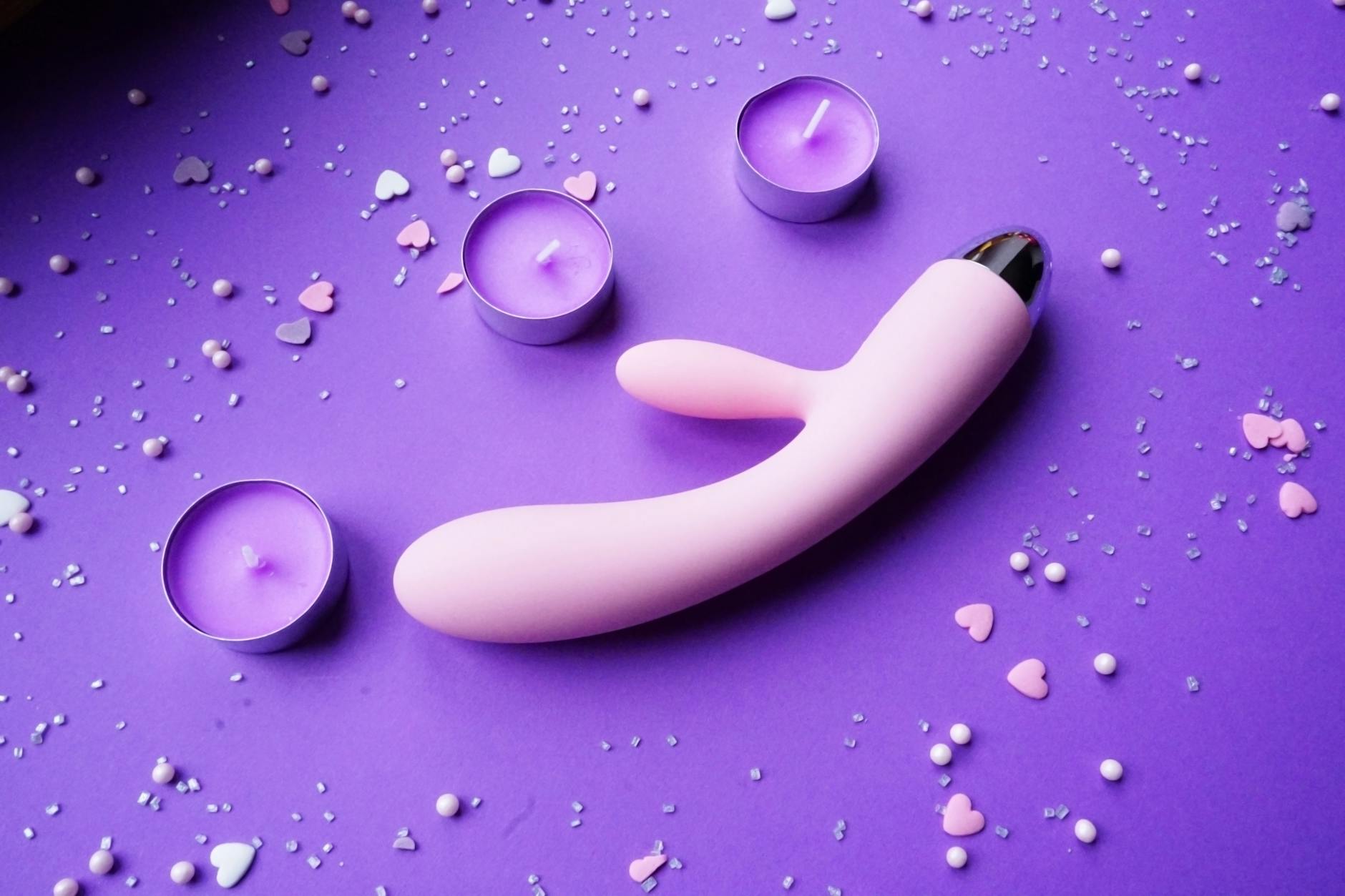
Let's start with the emotional part
Divorce scrambles your relationship with pleasure. Not because your body broke. Because for years, maybe decades, your sexuality was tangled up with someone else's needs, expectations, timing, and body. Even if the marriage was loving, even if the sex was good. There was never a moment when your pleasure existed in pure, uncomplicated space. It belonged to a couple, a unit, a compromise.
Now it's just you. And that feels strange in a way that has nothing to do with technique and everything to do with permission.
A lemon vibrator is a tool. But what it actually does is give you permission to say: this pleasure is mine. Not performance. Not negotiation. Not for anyone else's validation. Just the clean, simple experience of your own body responding to what you choose. That matters more than the vibrations themselves.
Why divorce changes how your body responds
Let me name what's actually happening, because shame is built on silence. During a marriage, you likely developed sexual patterns. Maybe you learned to prioritize your partner's arousal over your own. Maybe you became practiced at redirecting attention when you felt vulnerable. Maybe orgasm felt like something you achieved for the relationship, not for yourself.
These aren't character flaws. They're normal adaptations. Your nervous system learned a particular dance. And now that partner is gone, your body hasn't automatically reset to solo mode. It still feels echoes of that dynamic. You might feel guilt using a vibrator because you're "supposed to" want someone else. You might feel awkward or exposed, even alone. You might struggle to focus on sensation instead of judgment.
This takes time to rewire. A lemon vibrator helps because it's a consistent, judgment-free conversation with your own body. No one's watching. No one's waiting. No one's timing matters but yours.
The first session is about permission, not orgasm
Here's what I tell my newly divorced clients: your first goal isn't to come. It's to touch yourself without shame. That's the entire goal.
Set up somewhere private. Somewhere you won't be interrupted or anxious about interruption. Phone off. Door locked if you need that barrier to feel safe. Don't put pressure on yourself to feel sexy or confident. That's not the assignment.
Hold the lemon vibrator. Don't turn it on. Just feel it. It's weighted. It's smooth. It's designed to fit your hand and your body in a way that feels good. Spend five minutes with it off, exploring your own anatomy without judgment. This isn't foreplay. This is reacquaintance. You've lived in this body your whole life, but maybe not for yourself alone.
Then turn it on at the lowest setting. Pattern 1 on most lemon vibrators is gentle. You're not looking for fireworks. You're looking for a sensation that feels good without feeling like obligation. Move it around. Some areas will feel better than others. Pay attention. This is data about what your solo nervous system likes.
If you come, great. If you don't, that's also great. The win is that you did this alone, for yourself, without needing to perform or justify.
Address the guilt directly
Many of my clients report a specific flavor of guilt: "Am I supposed to be using this yet? Should I wait for the right person?" Here's my answer. Your sexuality isn't a resource to be saved. It's a capacity to be lived in. Using a lemon vibrator doesn't close the door to partnered sex. It opens a door to yourself. Those are different rooms.
If you were married, you've already experienced sex as part of a couple. That skill doesn't disappear. What you're doing now is learning what your body wants when there's no one else's pleasure competing for attention. That knowledge makes you a better partner eventually, not a worse one. You'll know what you like. You'll be able to communicate clearly. You'll be less dependent on external validation.
The guilt also comes from old cultural messages. Maybe you grew up being told that self-pleasure was shameful, or only something men did, or something you'd regret. Divorce doesn't erase those messages automatically. But you get to actively choose something different now. Every time you use a lemon vibrator alone, you're saying: I choose to trust my body. I choose to believe my pleasure matters. Those are revolutionary acts after divorce.
What to expect emotionally
Your body might surprise you. Some clients report feeling more sensation than they did during their marriage. Some report feeling absolutely nothing and having to slowly rebuild. Some have orgasms that feel different. Shorter. Longer. More intense. Different texture entirely.
All of that is completely normal. Your nervous system is recalibrating. There's no baseline to return to because this version of you, alone with yourself, might be entirely new.
You might also feel emotional. Grief. Relief. Anger. All of it's valid. Pleasure after divorce isn't always joyful. Sometimes it's complicated. Sometimes it unlocks sadness you haven't processed yet. That doesn't mean you're doing it wrong. It means you're actually present with yourself, which is harder than it sounds.
If you're cycling through big emotions, that's a sign to slow down and check in with yourself. Not to stop. Just to make sure you're choosing this for you, not running from something else.
Building a sustainable solo practice
Once you're past those first few sessions, here's what sustainable looks like. Most of my clients find a rhythm that feels natural. Maybe that's twice a week. Maybe it's when you have energy. There's no "should" here. You're listening to your own body, not following a prescription.
Keep your lemon vibrator clean. Water-based lube if you want it (water-based is safest for the silicone). Charge it fully so you're not frustrated when the battery dies midway through. These aren't revolutionary steps, but they do say something: you're worth the small effort of care. Your pleasure is organized enough to plan for.
If you're worried about desensitization, research shows that using a clitoral vibrator regularly doesn't permanently numb you. Your sensitivity bounces back quickly if you take breaks. That said, varying the pattern and intensity you use on your lemon vibrator helps you stay engaged and prevents that overstimulation feeling.
You might also notice that your taste evolves. Some newly single people find they want different intensity at different times. That's fine. Some want partnership again quickly. Some want years of solo exploration first. There's no timeline. You're writing this chapter for the first time.
When to seek additional support
If you find that you can't access pleasure at all, even with a lemon vibrator, that's worth exploring. Sometimes it's a medication side effect. Sometimes it's deeper trauma. Sometimes it's just that your nervous system needs time to feel safe again. A therapist can help you figure out which.
Likewise, if pleasure triggers intense sadness or grief that doesn't soften after a few sessions, that's not a sign to stop. It's a sign to talk to someone trained to help you process both. Divorce is a loss. It's okay if reclaiming your pleasure brings that into the foreground.
Some people also find that using a lemon vibrator helps with post-divorce anxiety by giving them a container for self-soothing. Your nervous system learns: this thing is safe, this person (me) is safe, this body is safe. That's healing work.
The long view
Divorce doesn't take your sexuality. It just temporarily misplaces your confidence in it. A lemon vibrator is a concrete way to say: I'm looking for myself again. Solo pleasure isn't a substitute for partnership if that's what you want eventually. It's practice in self-trust. It's data about what your body actually likes, not what you've trained yourself to want. It's proof that you're still here, still capable, still worthy of feeling good.
Your pleasure after divorce doesn't need to look like it did before. It doesn't need to look like anyone else's. It just needs to be yours, uncomplicated, and something you choose for yourself every single time.
People also ask
How long after divorce should I wait before using a vibrator?
There's no timeline. Some people are ready weeks after separation. Others wait a year or more. The question to ask yourself is: am I doing this for me, or am I doing this to fill a gap? If it's the former, you're ready. If it's the latter, give yourself a few more weeks. You don't need a vibrator to feel okay. You need to feel okay before a vibrator becomes actually pleasurable instead of just a distraction.
Can using a lemon vibrator affect my chances of finding a new partner?
Absolutely not. Learning what your body likes makes you a more confident partner, not less. You'll know what you want to ask for. You'll be less dependent on someone else's validation to feel sexual. You'll communicate more clearly. All of those are attractive qualities. If anything, knowing yourself well increases your chances of finding someone compatible.
What if I feel guilty every time I use it?
Guild after divorce is real, and it's often wired deep from childhood messages about sex and shame. Notice the guilt without trying to fix it immediately. Use the vibrator anyway. Over time, your nervous system will learn that solo pleasure is safe and acceptable. Therapy can accelerate that process if the guilt is overwhelming.
Should I tell my therapist or doctor that I'm using a vibrator?
Yes, if it comes up naturally in conversation. Your doctor should know if you're having pain or numbness during self-pleasure. Your therapist should know if pleasure is tied to other emotions you're working through. It's not a confessional moment. It's just health information. But it's also not necessary to announce it if you don't feel safe doing so. Your privacy matters.
Can I use a lemon vibrator if I'm on antidepressants?
Many antidepressants affect arousal and sensation, which can make solo pleasure feel harder or different. That's worth discussing with your prescriber. If it's a side effect, sometimes adjusting timing or dose helps. Sometimes trying different types of stimulation (like a lemon vibrator's suction pattern) bypasses the numbness. Your body's response to medication isn't fixed. It can shift over time and with different approaches.
What if I don't have an orgasm?
Not every session needs to end in orgasm. Some days the goal is just sensation. Some days it's emotional release. Some days it's nervous system regulation. Your body is learning how to be alone with itself again. That's enough. Orgasm will come when it comes. Forcing it defeats the purpose.
Let Hello Nancy know if you want to talk through any of this with someone trained in post-divorce intimacy. You deserve to feel good again, on your own terms.