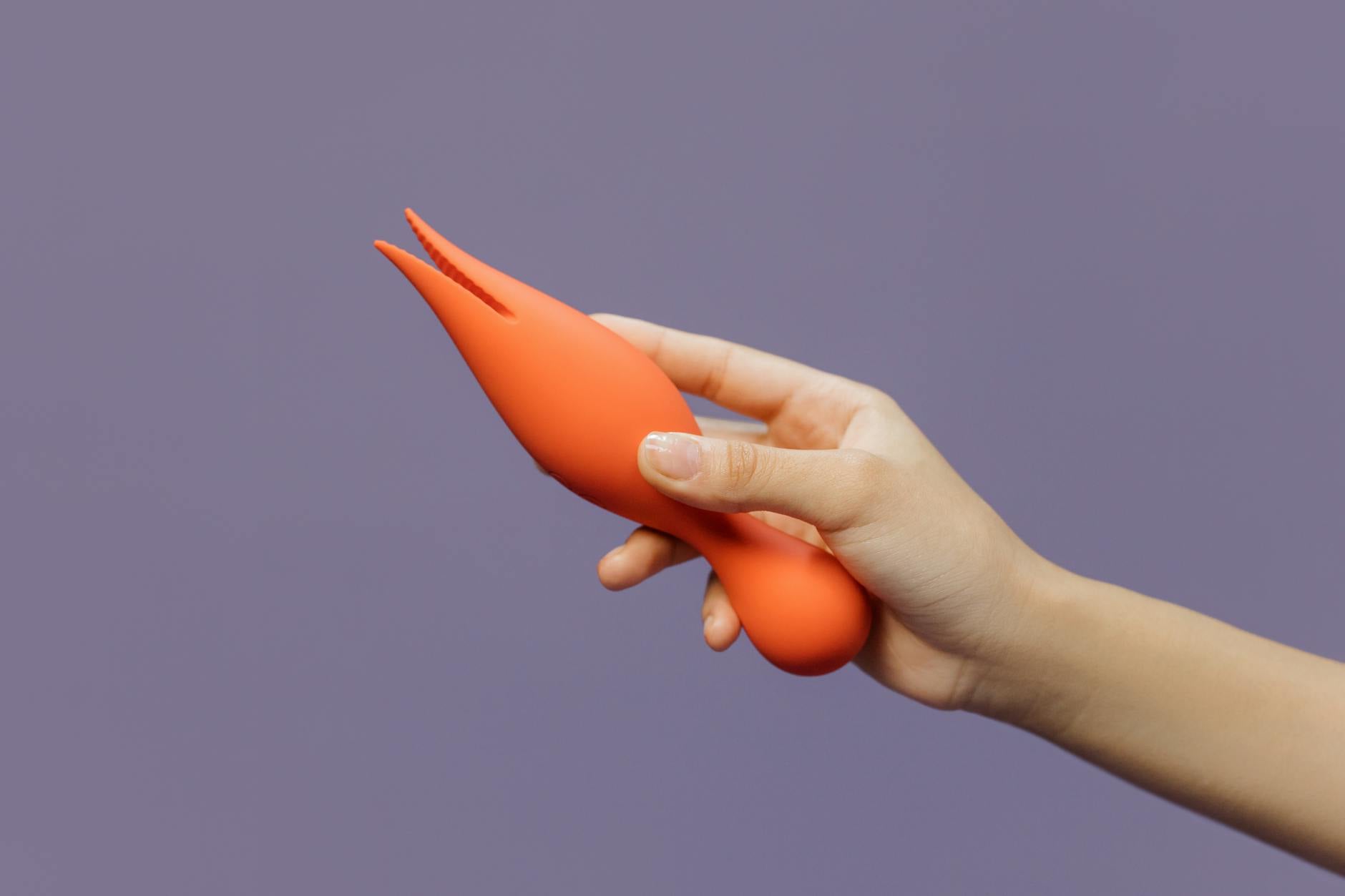
Let's name the thing nobody talks about
You and your partner are wired differently. One of you orgasms in five minutes. The other needs twenty. This isn't a flaw in either person. It's just how bodies work. But most couples treat it like a problem to solve instead of a dynamic to work with.
Here's what usually happens: the faster person finishes, feels awkward, stops moving, maybe fakes interest while waiting. The slower person feels rushed or resents the pressure. Both leave feeling a little unseen. A lemon vibrator changes that equation entirely.
Why the pleasure gap exists (and it's not what you think)
Most of us assume pleasure timing is biological destiny. Some truth there. But it's way more complicated. Response time depends on a mix of neurological wiring, arousal patterns, how much mental load you're carrying (your partner's pleasure counts as load), medication side effects, and how much permission you've given yourself to prioritize your own sensation.
There's also a frequency gap. People with penises tend to prefer consistent, direct stimulation that builds toward one peak. People with vulvas often prefer varied sensation, multiple peaks, and way more warm-up time. Thrust in a straight line for twenty minutes and yeah, one person's finishing while the other's mind is on Tuesday's meeting.
The good news: a lemon vibrator addresses both of those things at once.
How a lemon vibrator bridges the pleasure gap
When you introduce a clitoral vibrator into partnered sex, you're not replacing anything. You're adding a layer of direct, consistent stimulation to the person who needs more time to build. That accomplishes three things simultaneously:
First, it takes pressure off the faster partner to keep going indefinitely. They don't have to maintain intensity. They can slow down, change angles, or switch positions while the vibrator does the work.
Second, it shortens the absolute time it takes for both of you to finish, which means less fatigue and way more pleasure for everyone. Research on couples who use toys together shows significantly higher satisfaction scores than couples who don't. Not because the toy is magic. Because the toy makes it possible to stay in sync.
Third, it moves the conversation away from "What's wrong with you" and toward "What feels good right now." That's a completely different energy.
The setup that actually works
Here's where most couples get it wrong. They bring the toy in late. He's already close to finishing, she brings out the vibrator, and now it feels like a rescue device instead of a shared tool. Start earlier.
Bring the lemon vibrator into play when you're both aroused but neither of you is close yet. So maybe five to ten minutes in, depending on what you're doing. At that point, it's part of the foreplay, not an emergency measure.
Start on the lowest setting. The Lem vibrator has several intensity levels. Begin at pattern one or two. Let the slower partner tell you when they want more, not the other way around. This is crucial: the person who typically needs longer should be holding or controlling the vibrator when possible. That keeps their pleasure in their own hands instead of waiting for someone else to figure out what they need.
Position matters more than you'd think
If you're having penetrative sex, the vibrator needs access to the clitoris without blocking anything. That rules out some positions immediately. Spooning, modified missionary where you're tilted to one side, or woman-on-top with the vibrator angled toward the clitoris all work well.
If you're doing manual or oral sex, the vibrator is simpler. One partner's stimulating, the other's using the lemon vibrator on themselves or having it used on them. This setup is actually easier for communication because you can see each other and talk in real time.
Honestly, the position that works best is whichever one lets the slower partner relax and focus on sensation instead of performing. That might mean less eye contact, different angles than usual, or even taking turns. All of that is fine.
The conversation before the vibrator arrives
If you haven't used toys together before, introducing one requires a two-sentence conversation minimum. But better to go deeper. Ask your partner: "Would you be interested in trying a vibrator together? Not because anything's wrong. Because I want us to finish closer to the same time." That frame matters enormously.
If they say yes, pick the toy together if possible. Let them hold it, feel the vibrations, know what's coming. If they're nervous about it, how to use a lemon vibrator with a partner who has never tried toys walks through that exact dynamic.
If they say no, don't push. But also don't drop it. Circle back in a few weeks and ask what the hesitation is. Sometimes it's not about the vibrator. Sometimes it's shame, fear of inadequacy, or religious beliefs. Those deserve a real conversation, not a toy shoved in the nightstand.
During: what actually happens
Once you're in it, here's what I tell most couples: the first time will feel awkward. You're thinking about the vibrator instead of enjoying yourself. That's normal. The second time is better. By the third time, it starts to feel integrated instead of novel.
Pay attention to rhythm. If the faster partner is thrusting and the vibrator is buzzing at completely different speeds, it creates a weird sensory clash. Either sync them up or shift so the vibrator is doing one thing and the penetration is doing another. Your bodies will tell you which feels better.
Talk while it's happening. Not deep conversations, but "harder," "slower," "keep doing that." The person using the vibrator especially should narrate what they're feeling. That's partly for your partner's ego, but it's also useful information. If the slower partner says "I'm getting close," the faster partner knows to adjust their pace or intensity.
If someone loses their erection or lubrication dries up, pause. Add more lube, take a breath, reconnect. This happens to literally everyone. A vibrator is not a solution for dehydration or stress. It's a tool, not a magic wand.
After: the part that builds intimacy
Most couples stop talking the second the sex is over. That's when you're both vulnerable and actually willing to be honest. Ask: what felt good? What was weird? Do you want to try it again? How would you change it next time?
The slower partner should definitely speak up if the vibrator helped them reach orgasm faster. The faster partner should say if they felt less pressure. Both of you should acknowledge that you're working together instead of competing.
If it didn't work, that's fine too. Maybe the angle was wrong. Maybe the vibrator intensity was too intense or not intense enough. Maybe the psychological element of introducing a new tool just disrupted your normal groove. Try once more with small adjustments, or try a different angle entirely. How to use a lemon vibrator when pleasure feels disconnected from intimacy covers that specific territory if the vibrator feels like it's getting in the way of connection rather than helping it.
What if one partner is still resistant
If you've had the conversation and your partner is still not interested, don't bring a vibrator into the bedroom as a surprise. That's a boundary violation, even with good intentions. Instead, ask what the block is. Is it shame? Cost? Fear that you'll prefer the toy to them? Fear that they're not enough? Those are real concerns that deserve real answers, not a workaround.
Many of my couples find that once they understand the pleasure gap isn't about inadequacy, using a lemon clitoral vibrator together becomes a non-issue. It's not a sign of failure. It's a sign of someone saying, "I want us to feel good at the same time, and I'm willing to try something new to get there." That's actually pretty intimate.
FAQ
Does using a vibrator mean my partner isn't satisfying me anymore?
No. A vibrator is a tool, not a replacement. It's like bringing a second hand into foreplay. Most couples find that using a lemon vibrator together actually strengthens satisfaction because both people get to experience pleasure at their own pace instead of one person waiting or rushing.
How do I bring this up without hurting my partner's feelings?
Frame it as a "we" problem, not a "you" problem. Say something like, "I'd love for us to finish closer together," not "You take too long." Focus on the outcome you want (more synchronized pleasure) rather than what's wrong with either of you.
What if my partner uses it and finishes even faster than they normally do?
That actually works in your favor. If the faster partner reaches orgasm quicker with the vibrator in the picture, great. Now you know the slower partner can still use the vibrator to catch up. The goal isn't simultaneous orgasm anyway. The goal is both people reaching satisfaction without one person checking out halfway through.
Can we use the lemon vibrator during penetrative sex without it getting in the way?
Yes, with positioning adjustments. The vibrator needs clearance to sit against the clitoris. Spooning, modified missionary with a pillow under the hips, or woman-on-top all work. Experiment to find what doesn't create pressure on the vibrator and doesn't interrupt the sensation for the penetrating partner.
Is it okay if only one of us orgasms?
Completely okay. Orgasm is not the only measure of good sex. Some people are satisfied without it. Some nights you're tired and satisfied with closeness instead. The vibrator's job is to help you both finish if you want to. It's not a requirement.
How often should we use it?
As often as it feels good. Some couples use it every time. Some use it twice a week. Some pull it out when they notice the pleasure gap widening again. There's no rule. Listen to what feels connected and pleasurable, and do that.
The real thing
Different pleasure timelines aren't a flaw. They're just biology meeting psychology. A lemon vibrator doesn't ignore that difference. It works with it. You get to stay connected, both finish feeling satisfied, and stop wasting energy on awkward waits. That's worth the conversation.
If you want to explore this more, reach out. We're here to help you figure out what actually works for your bodies and your relationship.