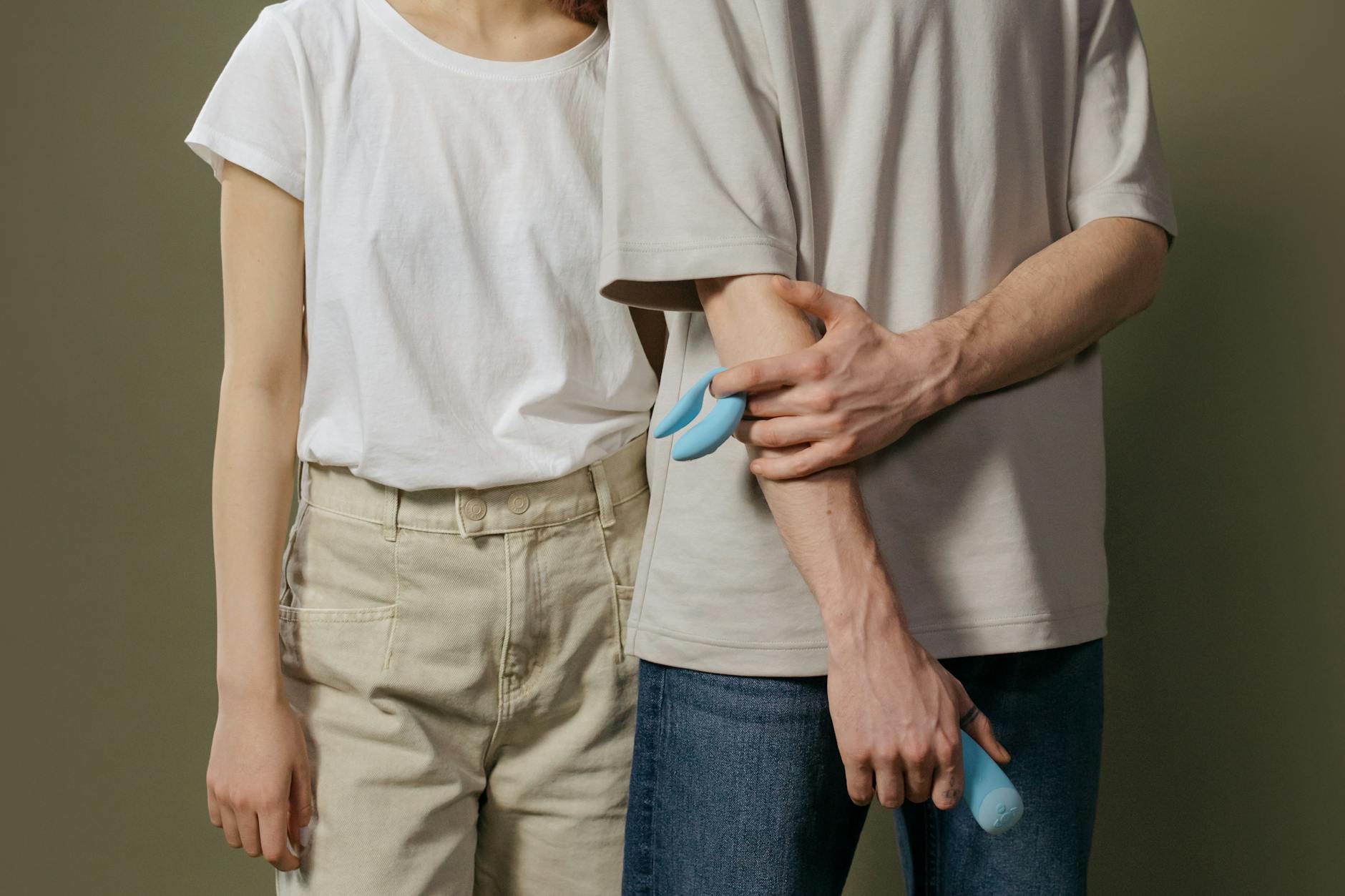
Let's be real about post-breakup pleasure
After a relationship ends, your body feels a bit like borrowed furniture. It's the same one you've always had, but suddenly nothing feels quite right. Your nervous system is recalibrating. Your brain is rewriting its patterns. And the idea of pleasure, especially solo pleasure, can feel weirdly complicated when what you're actually grieving is closeness.
Here's the thing though. Reconnecting with your own pleasure isn't about bouncing back or "getting over it." It's about remembering that your body is still yours. It always was.
Why now might actually be perfect
I've worked with dozens of people rebuilding their intimate lives after a breakup, and there's a common thread. Most say that solo exploration, done gently, was the thing that finally made them feel embodied again. Not performance-oriented. Not tangled up in someone else's timing or preferences. Just present with sensation.
A lemon vibrator is particularly good for this because it's designed around precision and control. You get to decide the intensity, the rhythm, the exact spot. There's no negotiation. No moment of "is this too much for them?" or "are they still interested?" It's just you and a straightforward mechanism that does exactly what you tell it to.
That agency matters way more than you'd think when you're rebuilding trust with yourself.
Before you even take it out of the box
First paragraph: you don't need to use it tomorrow. Or this week. Buying one is permission to explore, not an obligation to perform on a timeline.
Second paragraph: if you're still in the early sting of the breakup, that's fine. But there's a sweet spot between "too raw to think about pleasure" and "ready to reconnect." You're probably somewhere in that zone, which means you're thinking about it at all. That's the signal.
Third: choose a moment when you're genuinely curious, not when you're trying to distract yourself or prove something. There's a difference. One feels like discovery. The other feels like running away.
Setting the stage (without making it weird)
You don't need candles or rose petals or any of that stuff. You do need: time without interruption, somewhere comfortable (bed, a chair, whatever), and a moment when your nervous system is relatively settled. Not after an argument. Not right before a stressful meeting. Just a regular evening where you're not running on fumes.
Charge the lemon vibrator beforehand. Read the manual. Know where the buttons are so you're not fumbling in the dark trying to figure out which end is which. These little logistics matter because they keep you in a headspace of intention rather than anxiety.
Water-based lubricant is worth having on hand. Your body might produce plenty of natural lubrication once arousal kicks in, but sometimes after a breakup, that's slower to arrive. Lube removes the friction of wondering "is something wrong with me?" and the answer is always no, your body is just being cautious.
The actual first time
Start with the lowest setting. I mean the absolute lowest. This isn't about reaching an orgasm. It's about learning what the sensation actually feels like on your body, which is completely different from reading about it.
The design of a lemon vibrator means the suction and pulsing action works differently than a traditional vibrator. It's gentler in some ways, more focused in others. Your first session is reconnaissance, not performance. Spend ten minutes just noticing. Does the pattern feel good? Is the intensity too much? Does it help to use a bit more lube? All of that information is useful.
If nothing happens sexually, that's completely normal. Your body might need several sessions to warm up to it, especially if you're still processing the breakup on a nervous system level. Some people feel arousal immediately. Others take a few tries. Both are fine.
What you might feel
Most people report that the sensation is pretty different from partnered sex or fingers. It's more focused, more sustained, more precise. Some find that incredibly satisfying immediately. Others find it takes a bit of adjustment to know what they want.
You might notice that your mind wanders. That you keep thinking about your ex, or a work meeting, or whether you remembered to pay a bill. That's not a sign you're doing it wrong. It's a sign you're human. Your brain has a lot going on. Gently bring your attention back to sensation when you notice it's drifted.
You might also notice that pleasure feels different than it did before. Less explosive, maybe. Or different in texture. That's worth noting, because it tells you something about what your nervous system needs right now. You're not broken. You're just in a different season.
The emotional part nobody talks about
Sometimes, when you're exploring solo pleasure after a breakup, the first thing that comes up is loneliness. Or grief. Or rage. That's not a sign to stop. That's just your body processing something it couldn't while you were still in the relationship, still managing someone else's energy.
You can pause. You can sit with whatever comes up. You can come back to it later. There's no rush. The lemon vibrator will be there whenever you're ready.
Many people find that regular solo exploration, over weeks or months, actually rewires how they experience their own body. By the time they're ready to be intimate with a partner again (if that's something they want), they know their own body so well that partnered sex becomes a different conversation entirely. Less performance, more presence.
If you're struggling
If you find yourself not interested in pleasure at all, that's also okay. Sometimes grief suppresses desire for a while. That's your nervous system's way of saying it needs to focus on healing first. You can wait.
If you're finding that you're using solo pleasure as a way to avoid processing the breakup, that's worth pausing on too. Pleasure is great. It's not a replacement for grief. You need both.
If something feels physically uncomfortable, stop and adjust. Too much lubrication is better than too little. Lower settings are always an option. Your body is still learning what it likes.
Moving forward
The goal here isn't to become someone who's "over it." It's to become someone who's integrated it. Someone who knows their own body, likes their own company, and experiences pleasure as something that belongs to them, not something they're waiting to share with someone else.
A lemon clitoral vibrator is a straightforward tool for that. It does what it does. You get to decide how you use it, when, and for what. That simplicity is actually pretty powerful when you're rebuilding your relationship with yourself.
People also ask
Is it normal to feel guilty using a vibrator after a breakup?
Completely normal. A lot of people internalize the message that solo pleasure is somehow less legitimate than partnered sex, or that it's a sign they're not over their ex. Neither is true. Your pleasure belongs to you. Using a lemon vibrator is an act of self-care, not a betrayal of a relationship that's already over. The guilt usually fades once you've done it a few times and realized nothing bad happens.
How long after a breakup should I wait before trying a vibrator?
There's no universal timeline. Some people feel ready within weeks. Others need months. The signal isn't time elapsed, it's whether you're curious. If you're buying it to distract yourself from pain, that's one thing. If you're buying it because you're interested in reconnecting with yourself, that's another. Listen to that distinction.
Will using a lemon vibrator make partnered sex harder in the future?
No. If anything, knowing what your body responds to makes partnered sex better because you can communicate what you like. The concern is usually rooted in the myth that vibrators "desensitize" you, which isn't backed up by evidence. Your body is plenty capable of pleasure across many different contexts. Solo and partnered pleasure aren't competing; they're different.
What if I don't orgasm the first time I use it?
That's the majority experience, actually. Orgasm isn't the point of exploration. Sensation, comfort, curiosity, and reconnection with your own body are the points. Orgasm might come later, once your nervous system settles and your mind quiets. And it might not always happen. That's also fine. Pleasure exists without orgasm as the finish line.
Can I use a lemon vibrator if I'm still really sad about the breakup?
Yes. In fact, many people find that gentle solo exploration actually helps with grief because it grounds them back in their own body and their own agency. It's a way of saying to yourself: "I'm still here. My body is still mine. I can still feel good." That's not the same as "getting over it." It's healing alongside the grief.
How do I know which lemon vibrator setting is right for me?
Start at the lowest and work up. Every body is different, and after a breakup, your sensitivity might be different than you remember. Lower intensity can actually be more satisfying because it lets you feel subtle sensations. Once you know what the bottom setting feels like, you can experiment. Most people find a sweet spot at settings two or three on a standard lemon vibrator like the Lem, but that's completely personal.
Reconnecting with your own pleasure is one of the most underrated forms of healing after a breakup. You're not moving on. You're moving inward. That's where the real rebuilding happens.