The thing nobody tells you about being single
You're looking for a partner. That's a fact. But somewhere between the dating apps and the hope and the quiet nights, the belief creeps in that pleasure right now is somehow less legitimate. Like you're supposed to wait. Like solo pleasure is the thing you do until someone else shows up to make it real.
Here's what I've seen in my practice after decades of working with singles and couples: the opposite is true. The people who end up in the healthiest, most satisfying relationships are the ones who knew themselves first. Who understood what felt good, what their body needed, what they actually wanted versus what they thought they should want.
A lemon vibrator, or any clitoral vibrator, isn't a substitute for partnership. It's an investment in the clarity that makes partnership possible.
Why self-pleasure actually matters when you want a partner
There are three reasons I recommend this to almost every single client looking to build better relationship dynamics:
First, it resets your nervous system. When you're actively looking for a partner, there's a low hum of anxiety underneath everything. Am I enough? Will I find someone? What if I'm too old, too weird, too much? A lemon vibrator gives you consistent, reliable pleasure that you control entirely. No performance pressure, no wondering if they're enjoying it too, no comparison to past partners. That reliable pleasure literally calms your nervous system down. You become more relaxed, clearer, less desperate. And that's attractive.
Second, it teaches you what actual arousal feels like. When you're dating, there's a lot of pressure to respond in a certain way, on a certain timeline. A clitoral vibrator gives you space to explore your own rhythm without an audience. What patterns actually get you there? How long does it take? What kind of stimulation makes your body feel truly alive? These aren't rhetorical questions. Most single people have no idea. And then they get into a relationship and spend years trying to explain something they never figured out in the first place.
Third, it gives you standards. This one matters. I've watched people settle for mediocre partners because they didn't know what good felt like. A lemon vibrator that actually works, that gives you consistent, full-body pleasure every single time, raises the bar for what you'll accept from a real relationship. You stop tolerating partners who don't listen, who rush, who make it about them. Because you know what attentive feels like.
How to approach self-pleasure without the shame spiral
The guilt is real. You're single, you want a partner, and instead of being out meeting people, you're home with a vibrator. That logic makes sense on the surface. It doesn't stand up to two seconds of scrutiny.
Self-pleasure takes 20 minutes. Dating takes months. Both are valid uses of your time, and they're not mutually exclusive. You can go to yoga and use a lemon vibrator. You can be on a dating app and use a lemon vibrator. You can be actively seeing someone (if it's casual or polyamorous) and use a clitoral vibrator.
The only thing that changes your relationship status is finding the right person. A vibrator changes how you feel in your own body while you're waiting, which is actually the hard part.
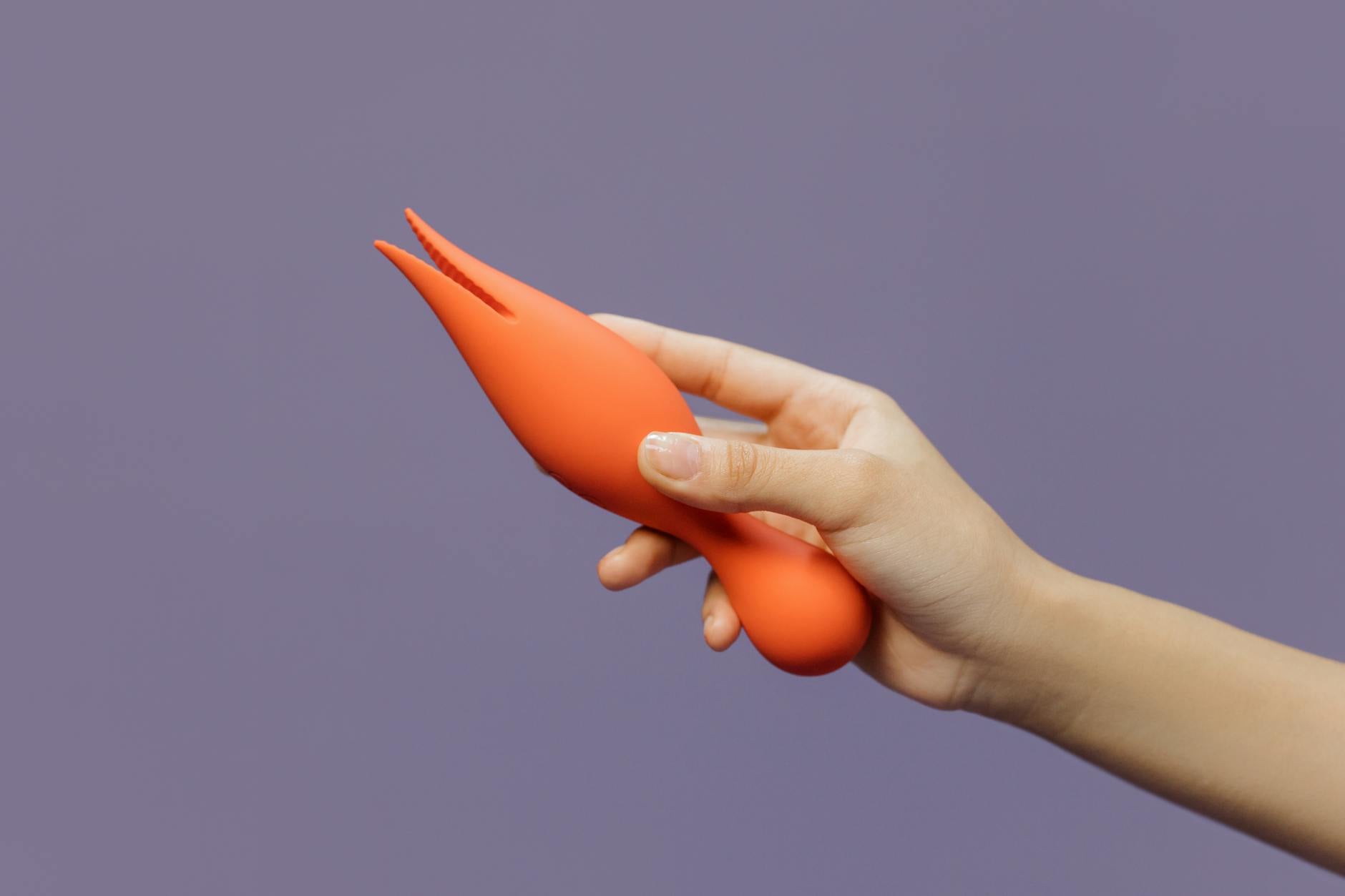
Photo by cottonbro studio on Pexels
The shame usually comes from one of three places. First, the idea that you should want someone else to give this to you. Second, worry that it means you're lonely or broken. Third, internalized messages from religion, family, or culture that self-pleasure is selfish or sinful.
Let me be clear: your pleasure is not a betrayal of your future partner. Your pleasure is not proof that you're failing at dating. Your pleasure is not sinful. It's self-knowledge. It's self-care. It's power.
The logistics: how to actually use a lemon vibrator when you're single
Here's the practical part. You've decided to do this, and now you need a framework that actually works.
Make it part of your routine, not an emergency measure. The worst approach is when solo pleasure happens only when you're lonely, or after rejection, or at 2 a.m. after a bad date. That ties it to negative emotions and makes it feel like a coping mechanism. Instead, approach it like you would exercise or skincare. Pick a time when you have space and privacy. Maybe that's Saturday morning, or Wednesday evening. Something regular. This removes the emotional charge and makes it feel like something you're choosing, not something you're falling back on.
Create a space, not just a moment. You don't need candles or music or rose petals. You need privacy, a place where you feel physically and emotionally safe, and about 20 uninterrupted minutes. That's it. But actually having that space matters. Close the door. Silence your phone. You're not trying to squeeze this in between other things.
Explore without a destination. The pressure to orgasm is real, especially when you're timing yourself, or worried you're doing it wrong, or wondering if you're broken because it takes longer than you expected. A lemon clitoral vibrator works best when you're curious rather than goal-oriented. Try different settings. Try different patterns. Try it while touching other parts of your body. Try it while thinking about different things. This is research on yourself. Pleasure is the bonus.
Understand your cycle if you have one. If you menstruate, your arousal and sensitivity shift across your cycle. Before your period, you might want more intensity. Right after, you might want longer warm-up time. During ovulation, you might get there faster. A lemon vibrator is consistent. Your body isn't. That's not a problem; that's just information.
What happens when you actually do this consistently
I see three shifts in my clients after about four weeks of regular solo pleasure practice:
First, the anxiety softens. Not completely, but noticeably. You become less willing to tolerate bad behavior from people who are casually dating you, because you're not desperate. You're meeting your own needs.
Second, you become clearer about what you actually want in a partner. Not what you think you should want. What you actually want. The sexual side matters. How they make you feel in your body matters. And you can't know that without knowing yourself first.
Third, you develop actual confidence. This is the thing that changes everything. It's not about looking better or being more available or learning conversation tricks. It's about knowing that you're capable of feeling good, of giving yourself attention, of mattering to yourself. That's magnetic. People feel that.
The transition when you do meet someone
Eventually, you might. You might start seeing someone who feels like a real possibility. Here's the honest part: solo pleasure doesn't disappear. It coexists with partnered pleasure. Some people find they want it more when they're in a relationship. Some people find they want it less. Both are fine.
If you're nervous about what a new partner will think, remember this: someone worth your time will not be threatened by the fact that you know your own body. If anything, they'll be grateful for it. You know what you need. You can tell them. You can show them.
The people who get uncomfortable with solo pleasure are the ones who feel entitled to be your only source of pleasure, your only source of attention, your only source of validation. That's not a healthy partner. That's a flag.
Why a lemon vibrator specifically
Hello Nancy's lemon clitoral vibrator works particularly well for this because of the suction design. It's not a grinding vibrator that requires a lot of pressure, which can feel intense or even numbing over time. Suction stimulates the hundreds of nerve endings around your clitoris without needing you to brace yourself against it. This means you can relax more completely into the experience. You're not working. You're receiving.
For someone who's learning their own pleasure, that matters. You get to discover what feels genuinely good without the distraction of managing the tool itself.
A final note
Being single while wanting a partner is a legitimate life circumstance, not a holding pattern. You deserve to feel good in your own skin right now, not just someday when the right person arrives. Self-pleasure is part of that. It's not a consolation prize. It's the foundation.
Use a lemon vibrator. Get to know yourself. Raise your standards. Build your confidence. And when the right person shows up, you'll be ready not because you're desperate, but because you know exactly who you are.
People also ask
Is it weird to use a vibrator when I'm actively dating?
Not even slightly. Most people who are dating use vibrators. The difference between someone casually seeing you and someone building a relationship with you isn't determined by whether you have solo pleasure in your life. It's determined by compatibility, communication, and actual interest. If anything, people who are sexually confident and know their own bodies tend to have better dating experiences. They communicate better. They know what they want. They don't settle.
Will using a lemon vibrator make me pickier or less likely to connect with someone?
It might make you pickier about what's worth your time, and that's good. It won't make you less likely to connect with someone genuinely compatible. If you're worried that knowing what good feels like will make it harder to settle for mediocre, that's the goal. You should be that picky. You should hold out for someone who matches your energy.
What if I feel guilty about this because of my religious or cultural background?
That's worth exploring with a therapist if you have access to one, ideally someone who specializes in sexuality and cultural identity. But here's what I can tell you: your pleasure is not a betrayal. It's not selfish. It's not a sin. Religious traditions that teach otherwise are controlling your body and your sense of agency. You deserve autonomy over yourself, full stop. A vibrator is a tool for self-knowledge, not a violation of any faith I'm aware of.
If I get really into this, does that mean I won't want partnered sex as much?
Not necessarily. Some people find that knowing what feels amazing solo actually deepens their interest in partnered sex, because they know what they're looking for. Some people find their libido is actually more stable when they're taking care of their own needs. It's different for everyone. But the baseline is this: solo pleasure and partnered pleasure aren't in competition. They coexist.
How do I use a lemon vibrator if I live with roommates or family?
Privacy is the key variable, not the size of your living situation. Close a door. Put in noise-canceling headphones. Use a small clitoral vibrator like the lemon design, which is quieter and more discreet than larger devices. Run water or music. You have more options than you think. And honestly, your pursuit of self-knowledge and pleasure is not something you owe an explanation for to anyone.
What if I've never had an orgasm, and I'm nervous about trying this?
First, you're not broken. Second, a lemon vibrator is actually a really good starting point because it's specifically designed to stimulate the clitoris, which is the most reliable path to orgasm for most people. Third, remember there's no destination. Try it, explore, see what happens. If orgasm comes, great. If it doesn't right away, you're still learning about your body. Patience with yourself is the real skill here.