How to Use a Lemon Vibrator When Your Desire Doesn't Match Your Partner's
Let's be real. One partner wanting sex twice a week and the other wanting it twice a month isn't a character flaw in either person. It's a mismatch, and it's incredibly common. What's less common is couples talking about it without shame creeping in.
Here's the thing: a lemon vibrator doesn't fix desire mismatch. Nothing does. But it can transform how you relate to the mismatch itself.
The actual problem with desire mismatch
When desire levels don't align, most couples split the difference and both end up resentful. The higher-desire partner feels rejected. The lower-desire partner feels pressured. Sex becomes a source of conflict instead of connection. Both people start pulling away.
What makes this harder is that most of us were taught desire should spontaneously match. If it doesn't, something's wrong with the relationship. That's false. Desire is biochemical, psychological, and circumstantial. It shifts with stress, exhaustion, hormones, and life stage. Two people rarely sync perfectly, and that's completely normal.
But normalcy doesn't stop the sting of feeling unwanted. Or the exhaustion of constantly initiating. Or the guilt of not wanting sex as often as your partner does.
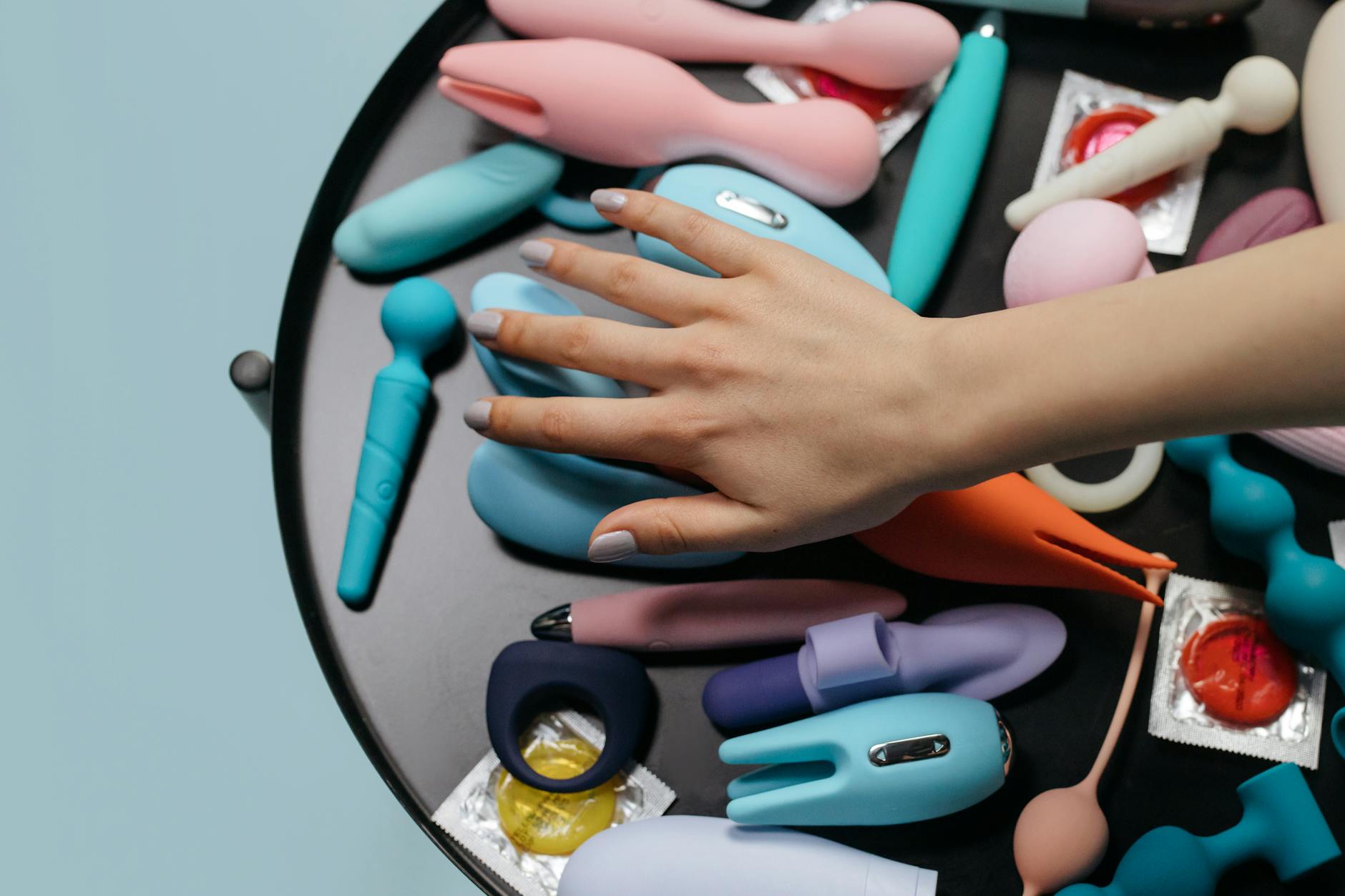
Photo by cottonbro studio on Pexels
Why solo pleasure matters when you're partnered
Here's the reframe: your partner's desire for you isn't the only valid desire in the relationship. Your own desire for yourself matters equally.
When one person in a couple has higher desire, they often suppress it or chase their partner's. When the other person has lower desire, they often feel guilty and perform sex they don't actually want. Both are forms of self-abandonment.
Introducing a lemon vibrator into the picture isn't about replacing partnered sex. It's about each person honoring their own pleasure independent of the other's. The higher-desire partner gets to experience satisfaction without waiting for their partner to match their appetite. The lower-desire partner gets to keep their boundaries without guilt. Both get to want sex on their own terms.
This sounds simple. It's actually radical in a culture that ties sexual worth to how much sex your partner wants with you.
How to start the conversation without it feeling like rejection
The worst way to introduce a vibrator is as a solution to the other person's "problem." "We need this because you don't want sex enough" is guaranteed to land as criticism.
The better frame: "I've been thinking about how this mismatch affects both of us, and I want to take some pressure off the dynamic. I'd like to explore what happens if I'm responsible for meeting my own desire, and you're responsible for knowing your boundaries. That takes the negotiation out of the bedroom."
Or more simply: "I want to use a vibrator for myself, sometimes with you and sometimes solo. Would you be open to that?"
The key is separating two conversations that usually get tangled. Conversation one: "My body needs more sexual release than you want to provide, and that's okay." Conversation two: "I still want intimacy with you, but not as a pressure or obligation."
Most couples fail because they try to have both conversations at once and end up fighting about neither.
What a lemon vibrator actually changes in the dynamic
When a clitoral vibrator enters the picture consensually, three things typically shift.
First, desperation dissolves. The higher-desire partner isn't in a constant state of hoping tonight's the night. They know they can satisfy themselves, which paradoxically makes them less resentful when their partner says no. The lower-desire partner isn't being asked to perform anymore, which takes pressure off and sometimes actually increases their desire.
Second, shame shrinks. So much of sexual mismatch is rooted in shame. "Something's wrong with me for wanting more." "Something's wrong with me for wanting less." A vibrator is a neutral object that says neither narrative. It says: you both have valid bodies with valid needs.
Third, curiosity can return. Many couples in a desire mismatch have stopped being curious about sex entirely. Introducing a toy can reignite that. Not because the vibrator is magic, but because it removes the performance pressure long enough for genuine interest to surface.
When you use a lemon vibrator solo, you're also gathering data about your own body. What intensity do you need? What fantasies work? How long does it take to orgasm when you're not performing? This knowledge makes you a better partner, not a less available one. You show up to partnered sex more aware of what you actually want.
The logistics: when and how to actually use it
Let's talk practical. Here are the scenarios that work for most couples navigating desire mismatch.
Scenario one: solo, in your own time. This is the most straightforward. You use a lemon vibrator when your partner isn't interested, on your timeline, in whatever way feels good. No performance, no negotiation. Your partner might be reading, sleeping, or out. This is your pleasure, your choice.
Scenario two: partnered but not penetrative. Your partner is present but you're using the vibrator on yourself. They might be watching, touching you elsewhere, or simply being intimate without expectation of participation. This removes the pressure of reciprocity while keeping connection.
Scenario three: during partnered sex. You use a lemon clitoral vibrator while your partner is inside you, or you use it while they use their hands or mouth. This is less about solving a mismatch and more about both of you getting what you need from the same encounter.
The frequency? Some couples establish a rhythm. "I'm going to use my vibrator on Tuesday and Thursday mornings." Others are more fluid. The point is to make it ordinary, not secretive or shameful.
When the vibrator becomes a problem instead of a solution
Sometimes a vibrator doesn't help. Sometimes it makes things worse. Here's what to watch for.
If your partner feels threatened by the vibrator, that's worth examining together. Sometimes it's about feeling replaced. Sometimes it's about deeper insecurity. A vibrator can't fix those things. Therapy can.
If using the vibrator becomes your only sexual outlet and you've completely stopped seeking partnered sex, that's worth investigating too. That usually means the relationship issue hasn't actually been resolved. You're just managing around it.
If the lower-desire partner suddenly feels MORE pressure because the higher-desire partner now has a vibrator and theoretically "shouldn't need them," that's a conversation about expectations that went unspoken.
The vibrator is a tool, not a therapist. It works best when you've actually talked about why the mismatch exists and what you both need.
The unexpected benefit: rediscovering your partner
Here's something that often surprises couples. When the pressure comes off, when one person isn't chasing and the other isn't running, something shifts. Sex becomes optional instead of obligatory. And optional sex is almost always better.
The lower-desire partner sometimes finds themselves initiating more, not less. Because they're no longer defending their boundaries, desire can actually emerge. The higher-desire partner stops resenting their partner and can actually enjoy them again. Both people feel more like partners and less like competitors.
I've worked with countless couples where a simple tool like a lemon vibrator created the space for the actual relationship to resurface. The mismatch didn't disappear, but it stopped being the central conflict. Desire levels are what they are. How you relate to the difference is what changes.
FAQ: desire mismatch and vibrators
Will using a vibrator make my partner think I don't want them?
Not if you're clear about what you're doing. "I'm using this because my body needs sexual release more often than you want to have sex" is different from "I'm using this instead of wanting you." The first is honesty. The second is the fear. Say the first out loud, and usually the anxiety softens.
What if my partner wants to watch me use a lemon vibrator but I find that too vulnerable?
Then that's your boundary. Solo use is completely valid. Some couples need time before partnered observation feels comfortable. Start however feels safe, and expand later if you want to. There's no "should" here.
Does using a vibrator mean we have a deeper problem?
Not necessarily. Desire mismatch is common. How couples handle it varies widely. Some use vibrators, some adjust frequency, some create different kinds of intimacy on off days. A vibrator is one tool among many. It only signals a problem if you're using it to avoid the actual conversation.
My partner says a vibrator is "cheating." How do I respond?
That belief usually comes from the idea that all sexual pleasure should come from your partner. But your body is yours. A vibrator isn't a person. It doesn't replace intimacy or connection. If your partner is struggling with this, couples therapy is worth considering. This belief often masks anxiety about adequacy or control, and that's real work to untangle.
We tried a vibrator once and it felt awkward. Should we give up?
Not unless you want to. Awkwardness is just newness. Most couples feel weird the first time. The second time is usually better. If it never gets less awkward, that might mean the underlying desire mismatch conversation still needs to happen.
How do I know if my partner is actually okay with this or just saying yes?
You don't, fully. But you can ask directly. "Are you genuinely comfortable with this, or are you going along with it?" and then believe the answer. If they say they're not okay with it, you're back to conversation. If they say they are, you can trust that while staying attuned to shifts in their behavior or mood. Check in periodically. Consent isn't one conversation. It's ongoing.
The actual bottom line
Desire mismatch isn't something a lemon vibrator fixes. It's something you navigate, and navigation is easier when you're not also navigating shame, resentment, and rejection.
A clitoral vibrator says: your pleasure is valid. Your boundaries are valid. Your body's needs are separate from your partner's. And you can honor all of that simultaneously.
If you're ready to have that conversation with your partner, that's where the real shift happens. The vibrator is just the permission slip. The conversation is the work.
If you're looking for more on navigating intimacy with your partner in new ways, how to use a lemon vibrator with a partner who has never tried toys covers the vulnerability piece more deeply. And if desire mismatch is tied to something specific like age or hormones, how to use a lemon vibrator when arousal builds slowly with age walks through that angle.
Your pleasure deserves to exist independently of your partner's. That's not cold. It's actually the foundation of real intimacy.