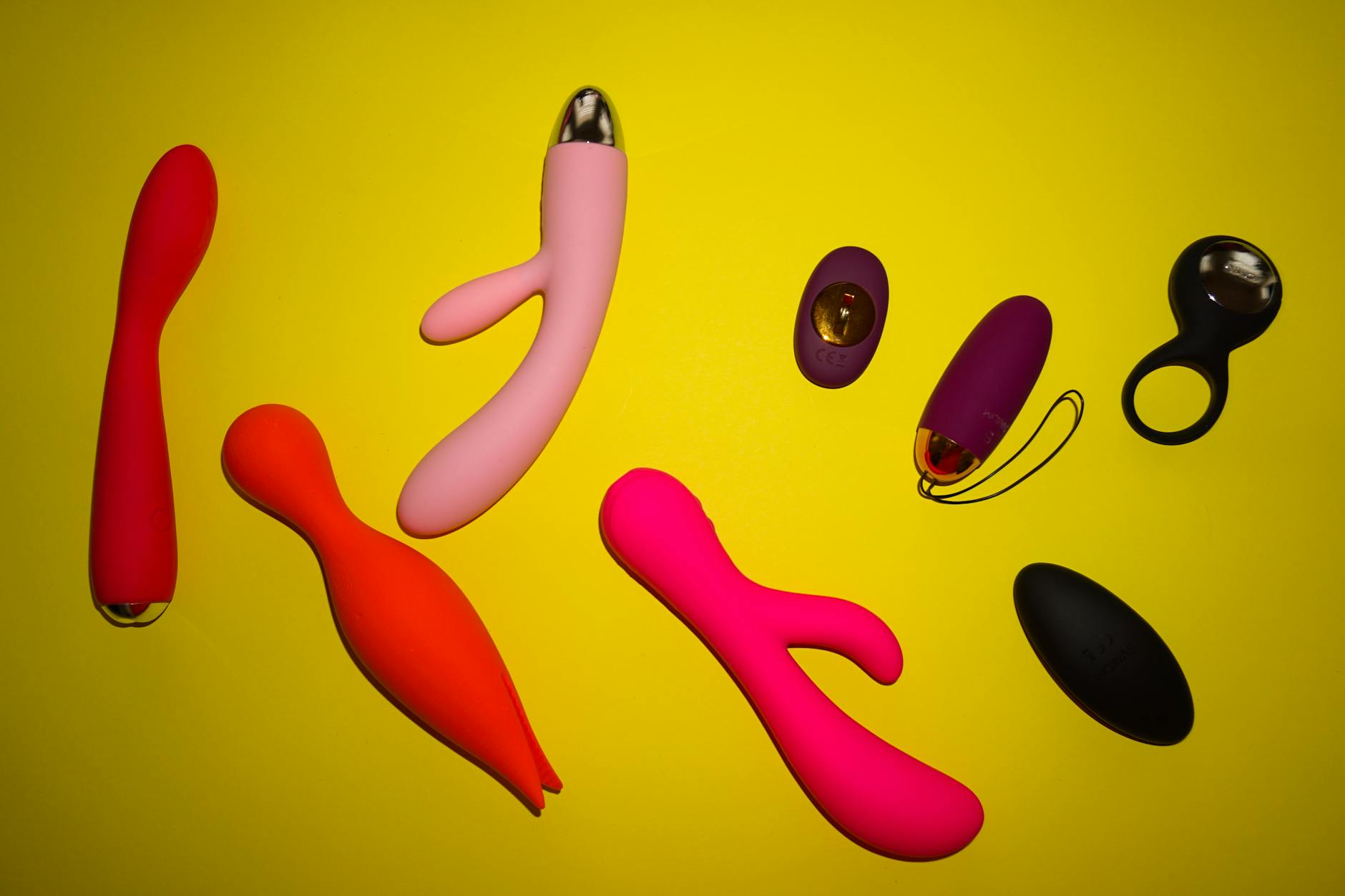
Why Lemon Clitoral Vibrators Feel Different During Different Cycle Phases
Here's something nobody tells you: your clitoral vibrator doesn't feel the same every week of your cycle. That's not you being moody or broken. That's biology, and it's useful information.
Hormones shift sensation, arousal ramp-up speed, and how intensely you experience stimulation. When you understand these phase-specific changes, you can stop blaming yourself for "not in the mood" and start building a rhythm that actually matches your body.
I work with a lot of people who think they should want the same thing, the same way, every single week. That expectation is doing you a disservice.
How estrogen affects clitoral sensation
Estrogen is your sensation amplifier. When it's high (late follicular phase, right before ovulation), your clitoris has more blood flow, the tissue is plumper, and nerve sensitivity goes up. This is when a lemon vibrator can feel almost too intense on higher settings. Your body is more responsive, arousal builds faster, and you might prefer gentler patterns or lower patterns than you'd typically use.
When estrogen drops (luteal phase, after ovulation), you lose some of that swollen sensitivity. The clitoris is still plenty capable of pleasure, but it requires more direct or sustained stimulation. This is often when people crank their lemon vibrator up to pattern 5 or 6, when they felt satisfied on pattern 3 just two weeks earlier.
This isn't desensitization. This is your hormonal baseline shifting week to week.
The follicular phase: quick arousal, easy intensity
The follicular phase runs from the start of your period through ovulation. Estrogen is climbing, and so is your sensitivity.
Here's what this typically feels like:
- Arousal builds in 5-10 minutes instead of 20.
- Lower vibration patterns (1-3) feel satisfying, sometimes even intense.
- Your clitoris feels more prominent, more easily located.
- Orgasms tend to build smoothly and feel more full-body.
If you use a lemon vibrator during this phase, you might discover you prefer air-suction patterns over straight vibration, or gentler suction intensity than you'd use later. Some people find that this is the week they can actually enjoy the Lem on lower settings without feeling like they're missing out on sensation.
One note: right before ovulation (peak estrogen), some people experience heightened sensitivity that can feel almost like tenderness. If your clitoris feels extra sensitive one specific week, that's probably ovulation week. It's not an injury. Backing off intensity slightly for 2-3 days is usually enough.
The ovulatory phase: peak sensation, fastest arousal
Ovulation is the shortest phase. It lasts about 24-48 hours, and it's when estrogen peaks before the big drop.
You might notice:
- Arousal can happen in minutes, sometimes seconds.
- Sensation feels heightened across your whole vulva, not just your clitoris.
- You might orgasm more quickly, sometimes multiple times in one session.
- Pleasure feels more intense overall, and lower vibration patterns are totally sufficient.
If you love the feeling of a clitoral vibrator, this is probably your favorite week. Your body is primed, responsive, and efficient. This is also the week to experiment with patterns you usually find too subtle, because even the gentlest setting on a lemon clitoral vibrator will feel present and clear.
Many people actually ease off during this week, not because they don't want pleasure, but because the stimulation feels so amplified that they need less time and less intensity to get where they want to go.
The luteal phase: slower build, stronger pressure needed
After ovulation, progesterone rises and estrogen drops. The luteal phase lasts about 12-14 days, and it's when most people notice the biggest shift in how their body responds.
What changes:
- Arousal takes longer. Budget 15-25 minutes of build-up instead of 5-10.
- Your clitoris needs more direct or sustained pressure. Air-suction intensity might need to go up a pattern or two.
- Vibration patterns that felt too intense during the follicular phase now feel just right.
- Orgasms might feel more concentrated, less full-body expansive.
- You might need longer sessions or multiple rounds to reach the same satisfaction.
This is not laziness or lost desire. This is your hormonal environment literally asking for different stimulation. If you're frustrated that your lemon vibrator "doesn't work" during the second half of your cycle, you're probably using the same settings you used during your follicular phase. Switch up the intensity.
Many people report that luteal-phase pleasure is deeper, more focused, and actually quite satisfying once they stop fighting the slower build and longer timeframe.
How progesterone affects everything
Progesterone is the reason the second half of your cycle feels different. It's not just about clitoral sensation. Progesterone affects your baseline arousal, your brain's responsiveness to stimulation, and even your capacity to stay focused on pleasure.
Progesterone can make arousal feel like it requires more conscious effort. Your brain isn't automatically primed for sexual stimulation the way it is during the follicular phase. This means:
- Mental relaxation becomes more important. Distractions hit harder during the luteal phase.
- Foreplay or warm-up time becomes essential, not optional.
- You might need to be more deliberate about setting up the right environment and headspace.
If you're someone who uses a lemon clitoral vibrator solo, the luteal phase might be when you actually prefer partnered touch first, or when you want to pair vibration with something else (fantasy, audiobook, partner involvement). You're not broken. You're hormonally primed for a different experience.
It's not that your clitoral vibrator stops working. It's that your nervous system is asking for a slightly different approach.
Menstruation: sensitivity and tenderness
During your period, estrogen and progesterone both drop. Your clitoris might feel tender or extra sensitive in a way that's not entirely pleasant.
Some people find that light stimulation during menstruation feels really good. Others find it uncomfortable and prefer to skip vibrators entirely during this window. Both are completely normal.
If you do use a lemon vibrator during your period, start with the lowest settings and go slow. Your clitoris is still capable of pleasure, but the tissue might be more fragile. There's no rule saying you have to use your vibrator every week. If menstruation is a week you prefer to skip, that's smart listening to your body, not missing out.
The practical playbook: adjusting through your cycle
Here's a simple three-week framework:
Weeks 1-2 (Follicular and ovulatory): Try lower patterns on your lemon vibrator. Start on pattern 1 or 2. Notice how quickly arousal builds. Spend less time in warm-up, more time enjoying the main event. If you're usually a pattern 4-5 person, you might discover that pattern 2 feels incredible this week. This is the week to try new patterns or explore gentler settings you thought you didn't like.
Weeks 3-4 (Luteal and menstruation): Expect to crank up the intensity. If you were happily on pattern 2 two weeks ago, you might need pattern 4 or 5 now. Budget more time for arousal. This is the week to pair your clitoral vibrator with something else. longer sessions are your friend.
This isn't a rule. It's a starting point. Your cycle might not follow the textbook timeline, and your hormone sensitivity might be totally different from someone else's. The key is tracking what actually feels good in your body week to week, rather than assuming you want the same experience every seven days.
What happens if you use hormonal birth control
If you're on hormonal birth control, your estrogen and progesterone are leveled out, not cycling. This means you probably won't experience the same week-to-week sensation shifts. Your experience with a lemon clitoral vibrator will likely be more consistent month to month, because your hormonal baseline isn't moving.
Some people find this steadier. Others actually miss the cyclical variation and feel more sexual satisfaction when they track natural hormone shifts. Neither response means anything is wrong.
If you're thinking about stopping birth control and wondering how it might affect your pleasure, how to use a lemon vibrator after stopping hormonal birth control walks through exactly what to expect.
Tracking without obsession
You don't need an app or a spreadsheet to do this. Just notice patterns over two or three cycles. When does your lemon vibrator feel most intense? When do you need more time or more pressure? When do you prefer gentler settings?
Once you see the pattern, you can actually plan around it. Use this knowledge with partners, with yourself, or just to stop assuming something's wrong with you when your pleasure response shifts.
Your cycle isn't a limitation. It's biological information that helps you get better pleasure, not more frustration.
FAQ: Cycle phases and clitoral vibrators
How long does it take for sensation to shift between cycle phases?
Most people notice changes within 2-3 days of a major hormonal shift. The biggest transition happens around ovulation (when estrogen peaks then drops) and when you enter the luteal phase (when progesterone rises). Some people feel the shift immediately. Others take a few days. By day 3 of a new phase, the change is usually obvious enough that you'll adjust your vibrator settings without thinking about it.
Can I use a lemon vibrator every day throughout my cycle?
Yes, as long as you're not experiencing pain or irritation. Frequency and intensity are different things. You can use your clitoral vibrator daily, but you'll probably want to shift the pattern or intensity based on where you are in your cycle. Daily use during your follicular phase might feel great on lower patterns. During your luteal phase, daily use might mean you crank up the intensity or spend more time in each session. Listen to what your body asks for, not what you think you "should" want.
Why does my lemon vibrator feel numb during my period?
Numbing during menstruation is usually about tenderness or sensitivity, not actual desensitization. Your clitoris might feel sore or overstimulated because estrogen and progesterone are both dropping. Try lower settings, shorter sessions, or a break. If numbness persists beyond your period, that's a different issue worth investigating. You can read more about why your lemon vibrator might make you feel numb.
Does ovulation affect how fast I can orgasm with a lemon clitoral vibrator?
Absolutely. Ovulation week is typically when orgasm comes fastest, even on lower vibration patterns. You might orgasm in 3-5 minutes when you usually need 15. This is hormonal, not a sign that you're "losing it" other weeks. The speed varies because your nervous system's responsiveness actually changes week to week.
Should I avoid my lemon vibrator during certain cycle phases?
No. There's no phase where a clitoral vibrator is unsafe. You might feel more comfortable using it during some phases than others, and you might adjust settings and intensity. But avoiding it entirely during the luteal phase or menstruation isn't necessary, just because you need different settings. Preference and pleasure vary. Skip it if it doesn't feel good that week. Use it if it does.
Can tracking my cycle help me understand why my partner doesn't match my energy?
Sometimes yes. If you're high-desire during your follicular phase and lower-desire during your luteal phase, but your partner is the opposite, cycle awareness helps you see that this isn't rejection or incompatibility. It's biology. You can plan together, communicate about what each phase needs, and stop blaming mismatched desire on the relationship. How to use a lemon vibrator with your partner after infidelity touches on how to rebuild that conversation with intention.
Your cycle is information, not a problem. Once you understand how your hormones shape sensation week to week, you can stop fighting your body and start working with it. Your lemon vibrator will feel different because you actually are different, biologically, every week. That's not a bug. That's the feature that lets you access different kinds of pleasure depending on what your body is asking for.